Surplus yard field notes

Apex Electronics Shelf Guide

Photos
22
Tags on photos
148
Things described
71
Read off nameplates
30
Not identified
10
Photographed
9 Nov 2026

These notes cover 22 photos taken on the shelves at Apex Electronics. Each numbered tag on a photo links to a short note on what the thing is and what it does. Everything was worked out from the photos alone. Nothing was opened or powered, so treat the notes as a starting point and correct anything that is wrong.

Broadcast cameras

The wire shelves with television cameras: one row of 1990s studio heads and four portable cameras from the 1980s. One of the portables carries a Los Angeles station's asset tag.

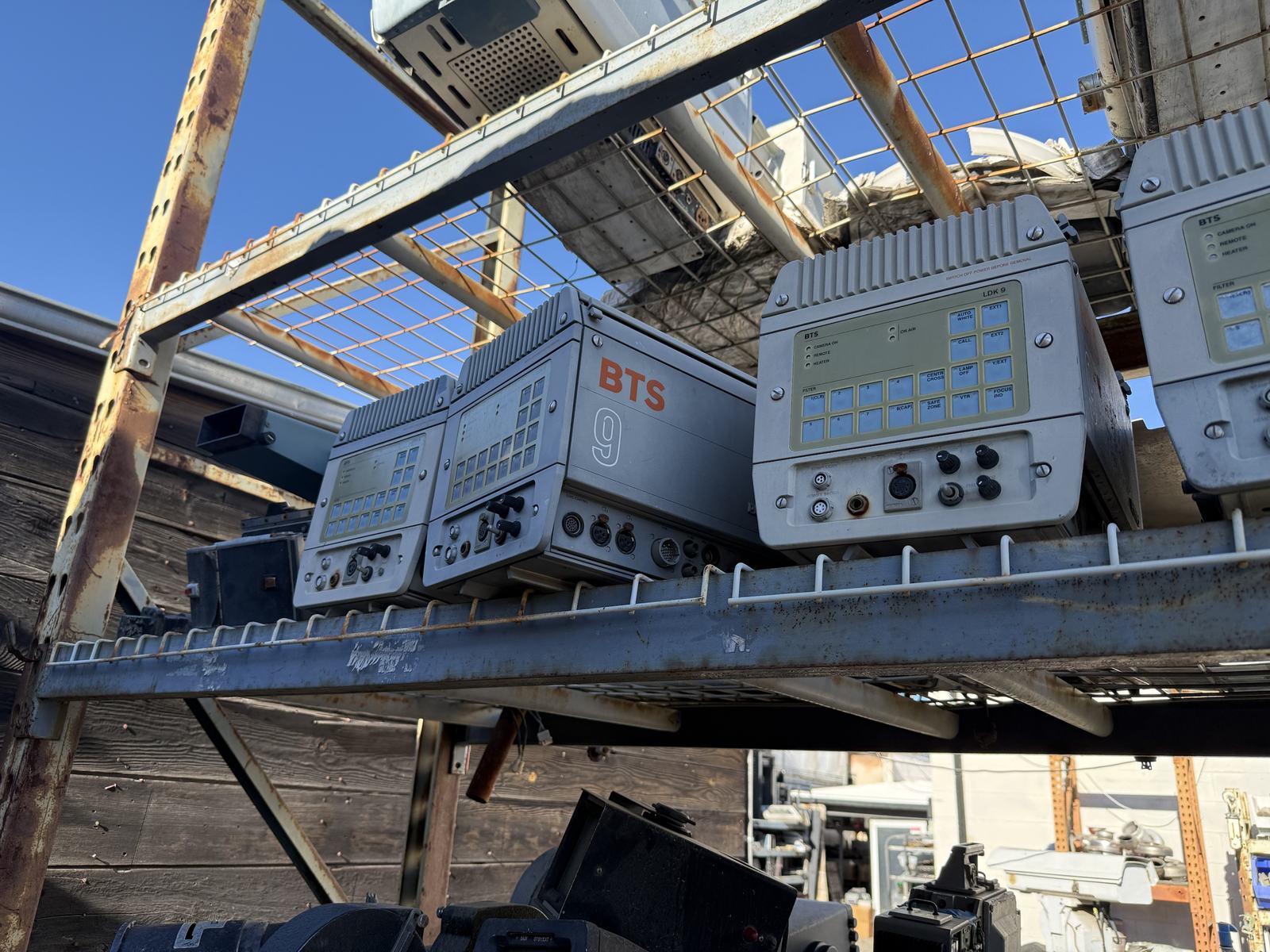
BTS LDK 9 studio camera heads

Broadcast studio camera, 1990–91 · about six on the shelf

Read off the nameplate
What it is
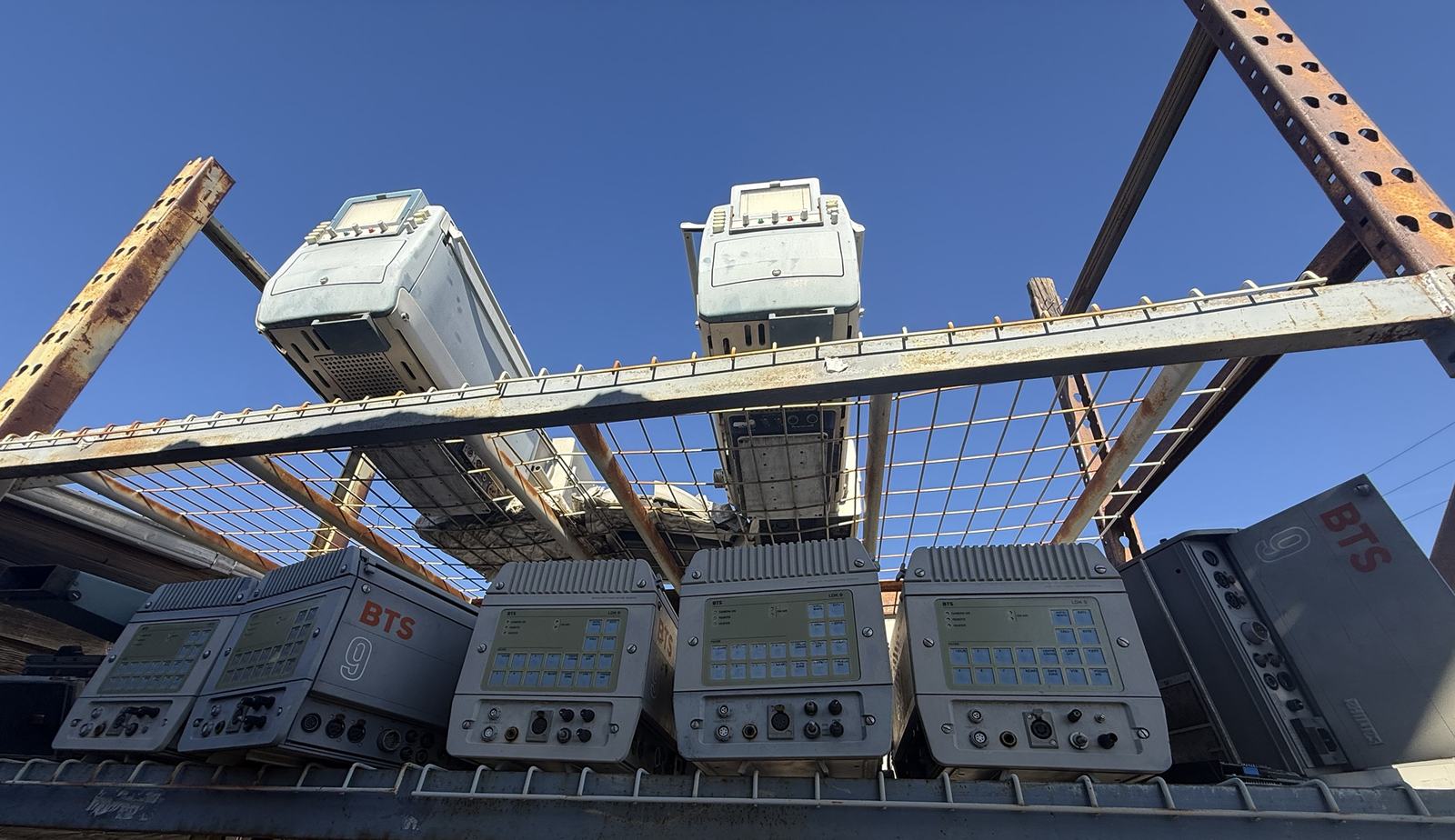
Studio camera heads from BTS, the Bosch–Philips broadcast joint venture. The side panel carries the BTS logo and a large 9, and the rear panel is marked LDK 9. The photos show the operator's end: lit buttons for the filter wheels and set-up, plus intercom and tally connectors.
What it does
Three CCD sensors behind a colour-splitting prism turn the lens image into broadcast video. A head does not put out a finished picture by itself. Video, power, intercom and control all travel over one triax cable to a base station in the control room, so each head needs its base station to work. BTS billed the LDK 9 as the first frame-transfer CCD studio camera.

In photo BTS heads on the upper shelf The row of LDK 9 heads, with two housings above The second Sony body, zoom lens fitted

Read more Museum of the Broadcast Television Camera, BTS list iF Design, LDK 9 CCD studio camera (1991) BroadcastStore, LDK-9 camera chain
Two blue-grey housings on the top shelf

Probably large-venue video projectors

Best guess
What it is
Seen from underneath through the wire shelf. Each has a small screen-and-keypad panel on one end and large vent grilles. That layout fits a large-venue video projector better than a camera. The nameplates are out of view.
What it does
If they are projectors, a high-power lamp, three imaging panels and a big interchangeable lens throw video onto the screens at concerts and conferences.

In photo BTS heads on the upper shelf The row of LDK 9 heads, with two housings above

Sony DXC-3000A

3-chip CCD colour video camera, mid-1980s

Read off the nameplate
What it is
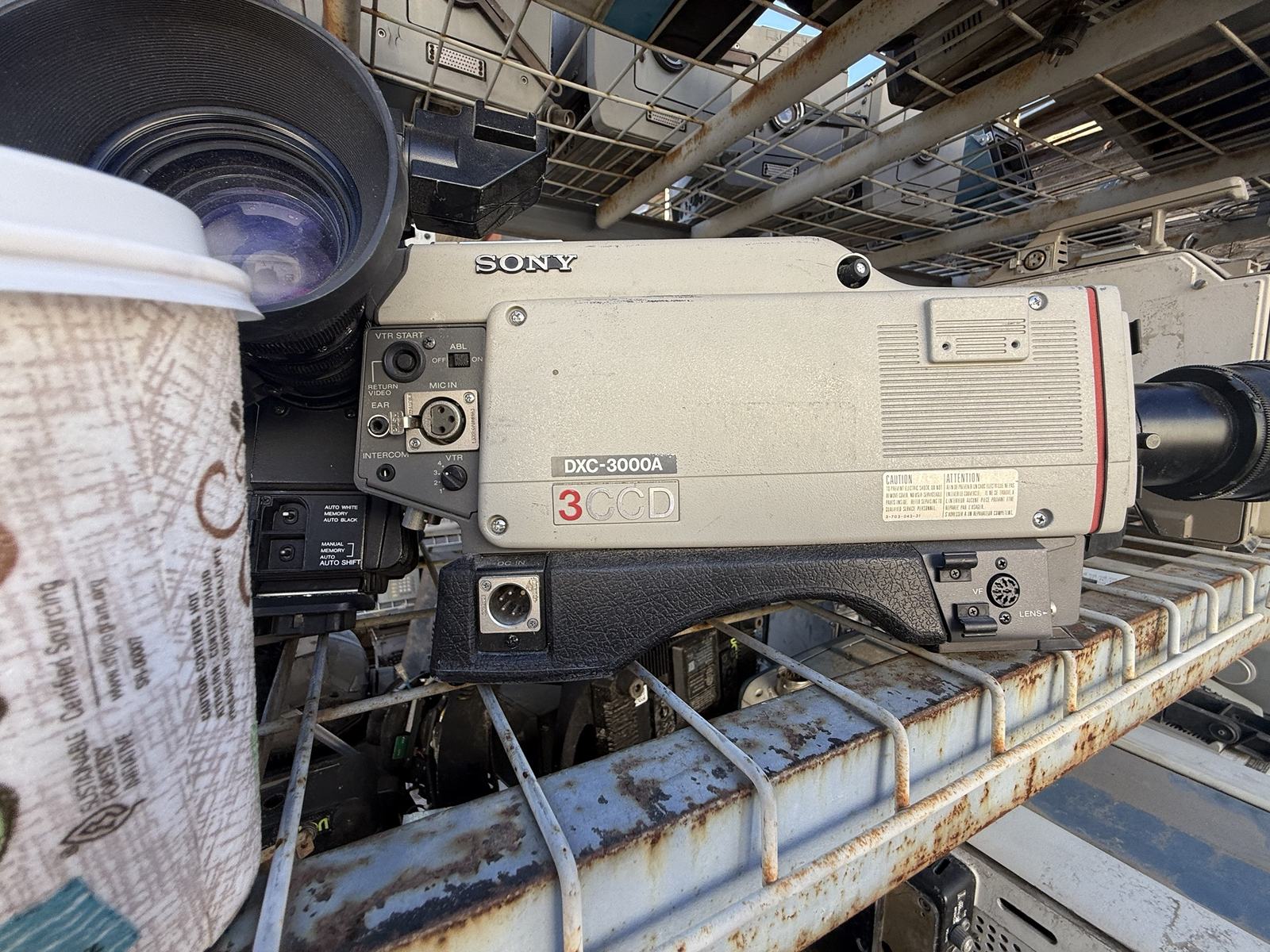
Marked DXC-3000A and 3CCD on the side. It was one of the first professional cameras to use three CCD chips in place of pickup tubes. Sony's brochure gives three 2/3-inch sensors, 560 TV lines and 58 dB signal-to-noise.
What it does
A field and studio camera head with no recorder built in. Composite video comes out on a BNC connector, the microphone plugs into the XLR socket on the side, and it runs from 12 V DC through the 4-pin XLR socket underneath. The brochure says it starts in about three seconds with no warm-up.

In photo Sony DXC-3000A

Read more Sony DXC-3000A brochure Adorama, used DXC-3000A listing

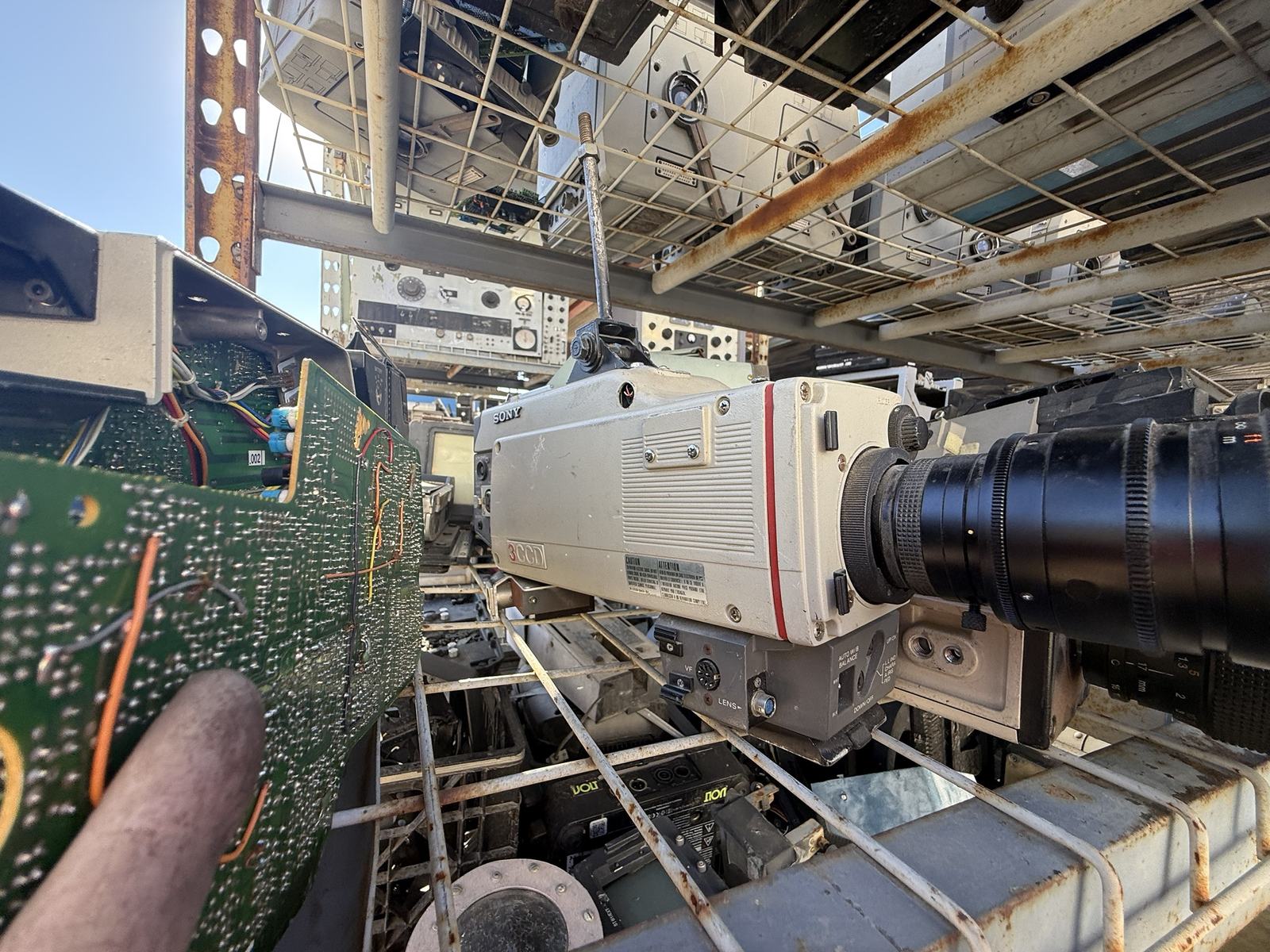
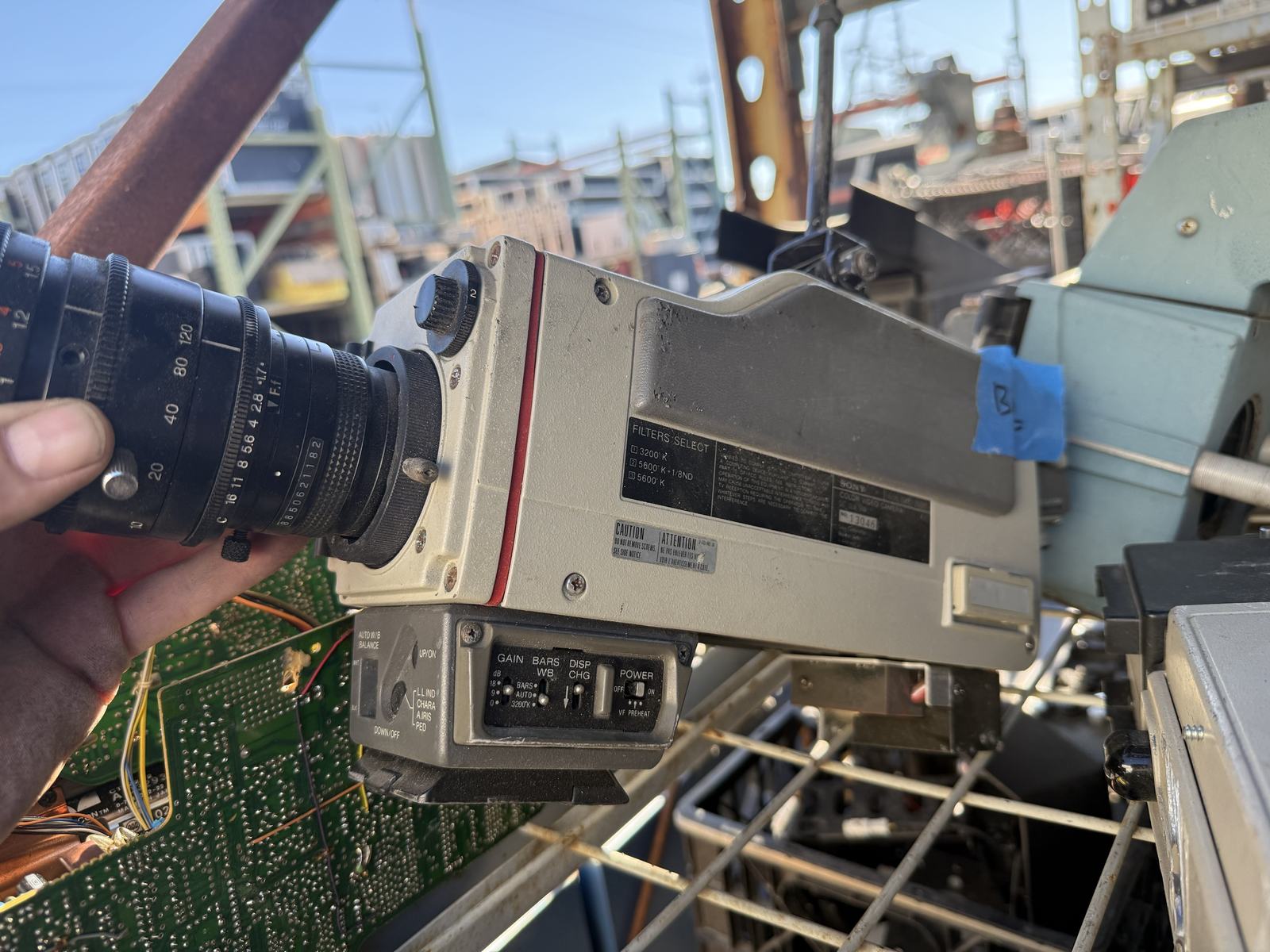
Sony 3CCD camera body with zoom lens

Same DXC-3000 family

Read off the nameplate
What it is
A second Sony 3-chip body with a broadcast zoom lens still mounted. The top handle is gone and a threaded rod runs through the top cover. The side plate lists the filter wheel positions: 3200 K, 5600 K + 1/8 ND and 5600 K.
What it does
It works the same way as the DXC-3000A. The small panel under the lens mount has the gain, colour bars, white balance and power switches. The VF PREHEAT position on the power switch warms up the viewfinder's small picture tube.

In photo The second Sony body, zoom lens fitted The second Sony body, control side JVC BY-110 Hitachi Z-31 and the Ikegami

JVC BY-110

Three-tube colour camera, tagged July 1984

Read off the nameplate
What it is
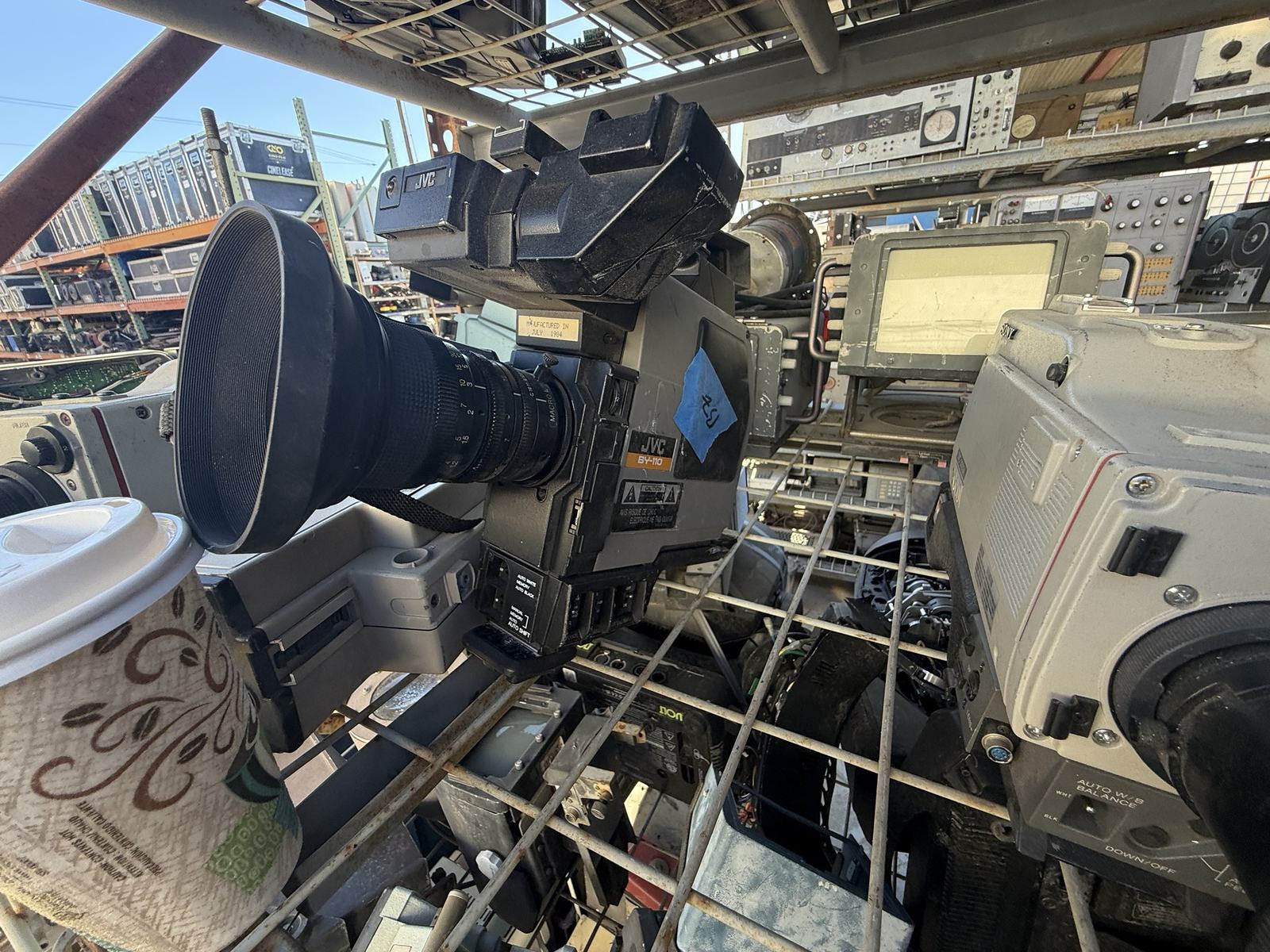
A complete BY-110 with its own servo zoom lens, lens hood and viewfinder. It uses three 1/2-inch Saticon pickup tubes behind an f/1.4 prism. JVC rated it at 600 lines and 54 dB.
What it does
A news and industrial camera from just before CCDs took over. Each tube scans one colour of the image with an electron beam. An auto-shift switch lines the red and blue pictures up with the green one and stores the result in battery-backed memory. It runs on 12 V at about 1 A, and video leaves on the 14-pin connector that went to the recorder.

Handle with care Pickup tubes burn. Keep the lens capped and never leave it aimed at the sun or a bright lamp.

In photo JVC BY-110

Read more SMECC, JVC BY-110U brochure text

Hitachi Z-31 Computacam

Three-tube colour camera (FP-Z31), mid-1980s

Read off the nameplate
What it is
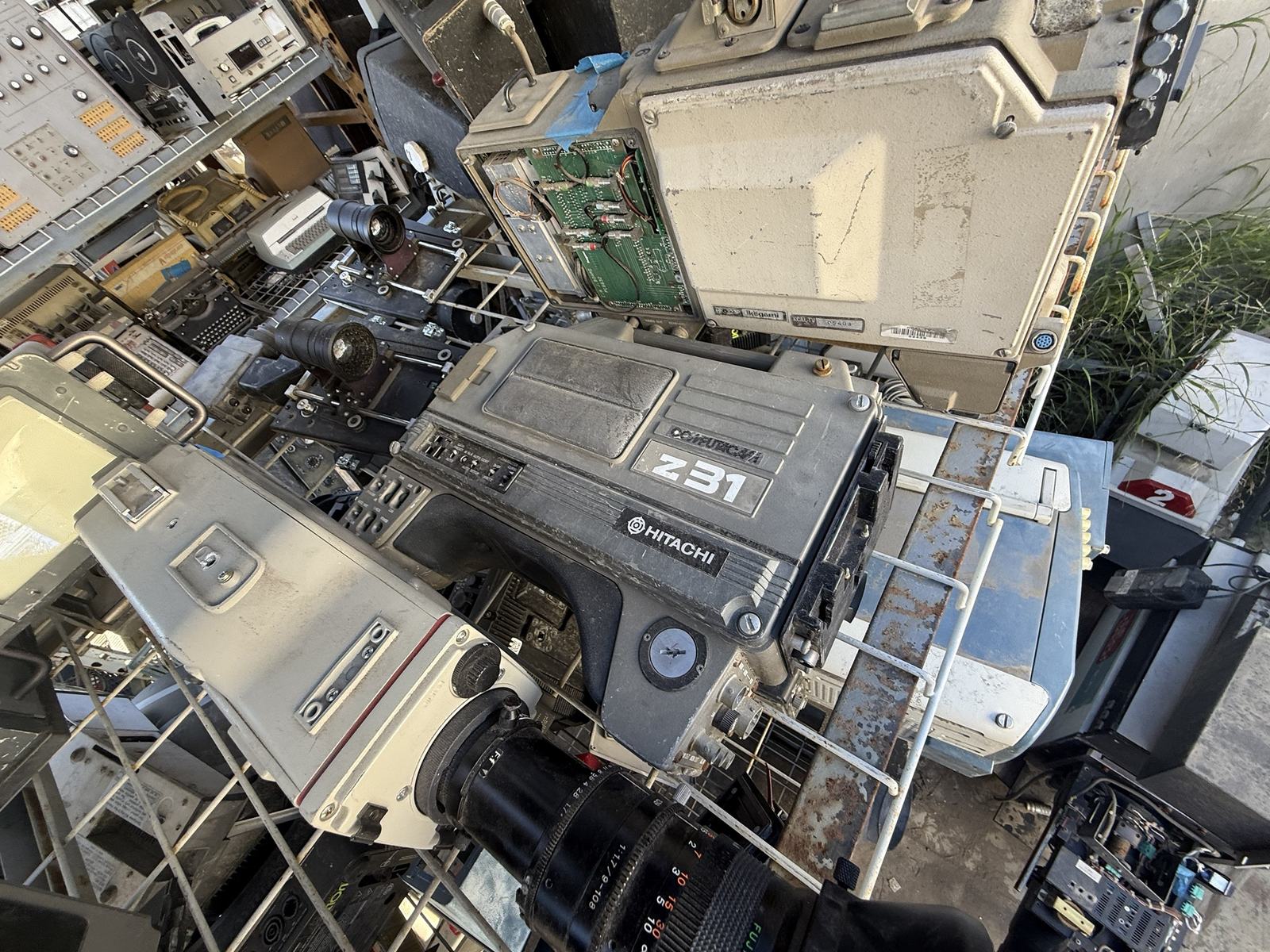
Marked COMPUTACAM Z31 and HITACHI on the side. The FP-Z31 uses three 2/3-inch Saticon tubes. Hitachi's manual gives 750 lines and 58 dB.
What it does
A portable broadcast and industrial camera. The Computacam name refers to its microcomputer, which runs automatic white balance, black balance, centring and set-up so the three tube pictures stay registered without a technician. It runs on 12 V DC at about 20 W and puts out composite video.

Handle with care Pickup tubes burn. Keep the lens capped and out of direct sun.

In photo Hitachi Z-31 and the Ikegami

Read more Hitachi FP-Z31 operation manual

Ikegami news camera with a KCAL-TV tag

Tube-era ENG camera, HL series

Read off the nameplate
What it is
The badge reads Ikegami and the asset tag reads KCAL-TV 05403, so it came out of Los Angeles channel 9. The model number on the badge is too small to read in the photo. The shape is the HL-79 family, the standard news camera of the early 1980s, which used three 2/3-inch Plumbicon tubes.
What it does
A shoulder-mount electronic news gathering camera. One side cover is off, which exposes the circuit boards.

In photo Hitachi Z-31 and the Ikegami

Read more Notes on the Ikegami HL-79D

Stage lighting

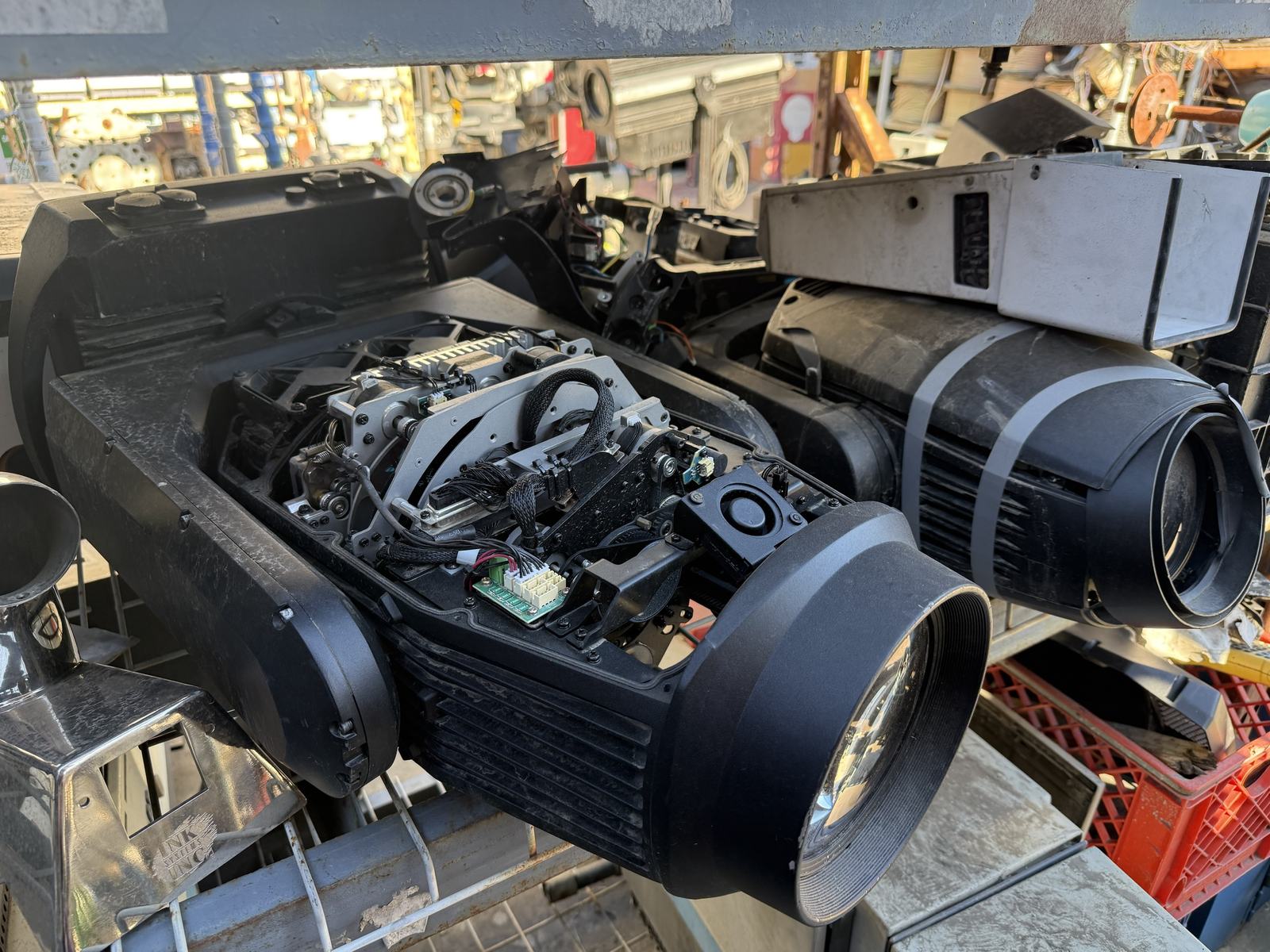
Two automated spotlights from a touring or theatre rig, opened up.

Moving-head stage lights

Automated arc-lamp spots, two with covers off

Recognised by shape
What it is
Two large moving-head fixtures lying on their sides. The open one shows the optical train: fans, lens carriages on rails, wheels and a driver board. The taped one behind it has the wide flared front lens of a Vari-Lite VL3000-type spot. The maker's label will confirm.
What it does
A discharge lamp sits at the back of the head. In front of it, stepper motors turn colour wheels and pattern wheels, slide the zoom and focus lenses and close an iris, all commanded over DMX from the lighting desk. The yoke that holds the head pans and tilts it.

Handle with care Leave any arc lamp in its housing. The lamps are under pressure and the igniter makes multi-kilovolt pulses.

In photo Moving heads with the covers off

Bench and office shelf

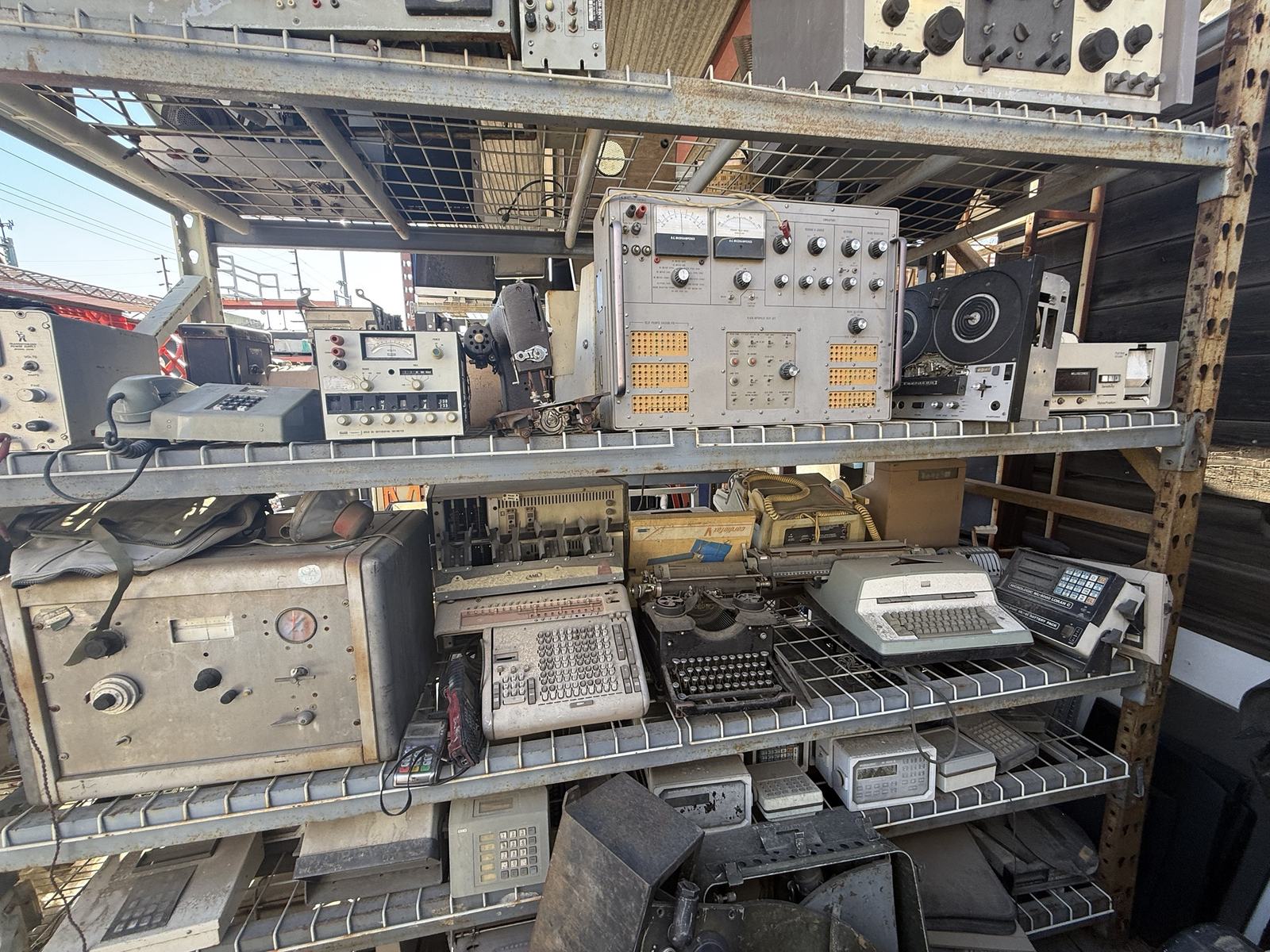
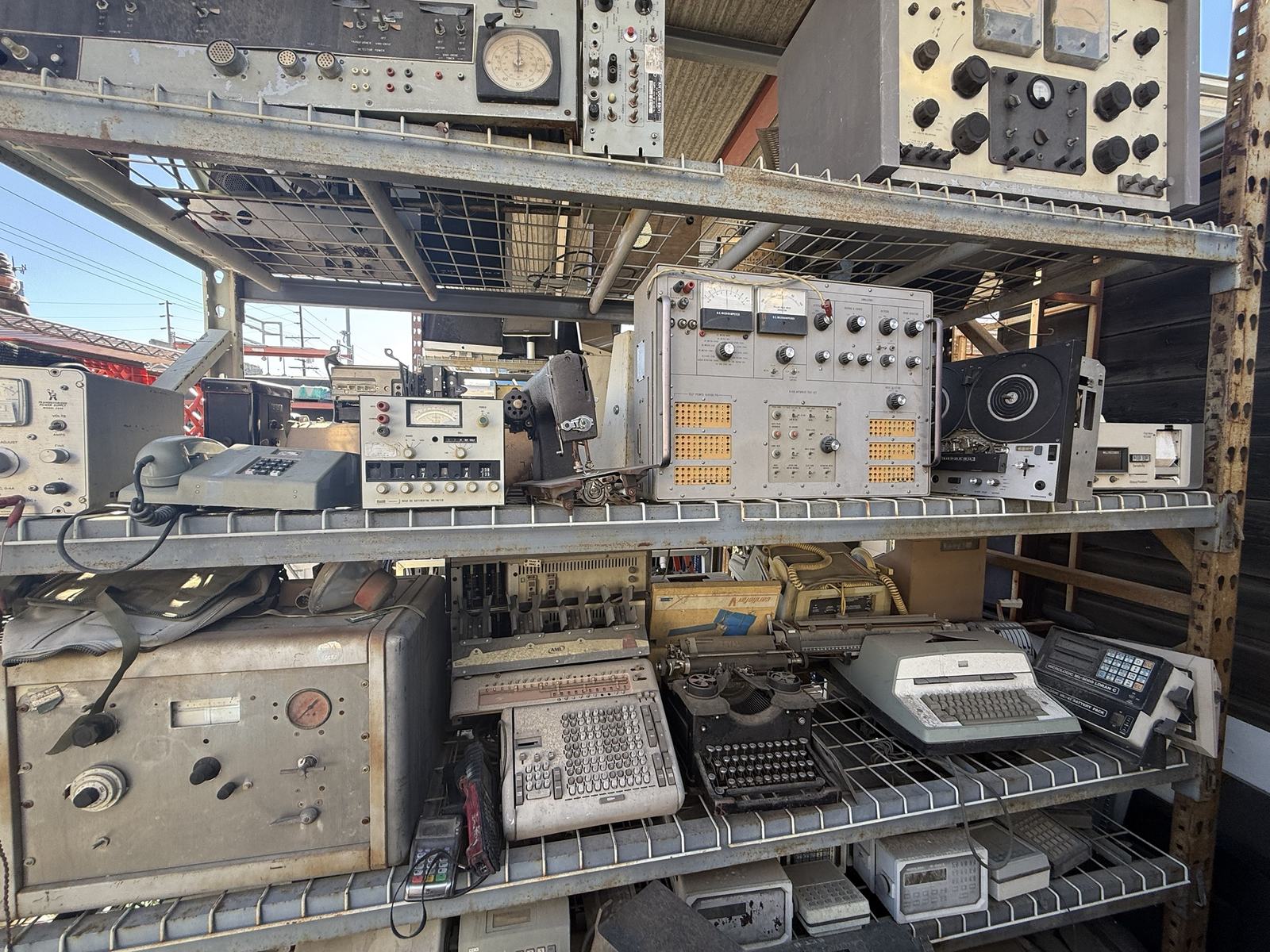
A mixed shelf: precision bench instruments, an autopilot tester, a military telephone, cardiology gear and office machines.

Power Designs Model 4005

Transistorized bench power supply, 1960s

Read off the nameplate
What it is
The panel reads TRANSISTORIZED POWER SUPPLY MODEL 4005 under the Power Designs logo.
What it does
A regulated, adjustable DC supply for the electronics bench, from the first generation of all-transistor lab supplies. Coarse and fine VOLTS knobs set the output and the AMPS control limits the current.

In photo The shelf, straight on The same shelf from the left

16-button desk telephone

Looks like an AUTOVON set

Recognised by shape
What it is
A grey push-button desk phone whose keypad is four columns wide instead of three.
What it does
AUTOVON was the US military's worldwide telephone network, in service from 1966 until the early 1990s. The extra column of keys set a call's precedence: Priority, Immediate, Flash and Flash Override. A higher-precedence call could bump a lower one off a busy trunk. If the fourth column is marked FO, F, I and P, that is what this phone is.

In photo The shelf, straight on The same shelf from the left

Read more Autovon, Wikipedia

Fluke 895A

DC differential voltmeter

Read off the nameplate
What it is
Labelled 895A DC DIFFERENTIAL VOLTMETER. A row of five readout dials runs across the middle of the panel.
What it does
A precision voltmeter that works by balancing. The five dials set a Kelvin-Varley divider that taps a known fraction of an internal 1100 V reference. You turn them until the meter reads zero, then read the voltage off the dials. It measures 0 to ±1100 V to about 0.0025%, and at null it draws no current from the circuit under test. It also works as a megohmmeter.

In photo The shelf, straight on The same shelf from the left

Read more Fluke 895A manual summary

Industrial sewing machine head

Head only, no table or motor

Recognised by shape
What it is
A dark cast-iron sewing head sitting between the instruments.
What it does
Stitches heavy material once it is mounted in a table with a clutch motor.

In photo The shelf, straight on The same shelf from the left

ARC autopilot test set

Bench tester for the CA-550A and CA-550A/FD

Read off the nameplate
What it is
The ARC logo is at top left and the panel is titled AUTOPILOT TEST SET. The orange jack fields are marked TEST POINTS CA550A/FD and CA550A. ARC was Cessna's avionics arm, and the CA-550 is the computer-amplifier of its 400B Navomatic autopilot.
What it does
It stands in for the aircraft on the bench. The SIMULATORS knobs feed the autopilot computer made-up attitude, heading and course, altitude and radio-deviation signals. The two DC microammeters show what the computer sends back to the servos, and the jack fields bring every internal test point out to the front.

In photo The shelf, straight on The same shelf from the left

Read more ARC CA-550A/FD computer amplifier listing

Tandberg open-reel tape deck

Quarter-inch reel-to-reel recorder

Read off the nameplate
What it is
Tandberg badge on the head cover. One reel is still mounted and the chassis is out of its case.
What it does
Records and plays audio on quarter-inch tape. Tandberg of Norway built these for homes, schools and language labs.

In photo The shelf, straight on The same shelf from the left

Beige recorder with a MILLISECONDS display

Probably an ECG or pacemaker-check recorder

Best guess
What it is
Controls marked Sensitivity and Stylus Position, a paper slot, a numeric window labelled MILLISECONDS and two jacks marked LA and RA.
What it does
LA and RA are the left-arm and right-arm electrodes of an electrocardiograph. A heated stylus draws the heart trace on a paper strip, and the display would show the interval between beats or pacemaker pulses. The carton on the shelf below is for a Cardiofax V, a Nihon Kohden ECG machine, so this corner of the shelf is cardiology gear.

In photo The shelf, straight on The same shelf from the left

Steel case with a dial, gauge and two valve levers

Not identified

Not identified
What it is
A stainless cabinet with a counting dial, a small pressure gauge, two lever-handled valves and a scale window. The tag at top left is torn.
What it does
The valves and gauge point to a pneumatic test set or pressure calibrator. A clear photo of the tag would settle it.

In photo The shelf, straight on The same shelf from the left

Paper-handling machine, badge AMI or AML

Not identified

Not identified
What it is
A grey office machine with a row of paper guides and feed slots. The oval badge reads AMI or AML.
What it does
It feeds or sorts cards, cheques or forms. The photo does not show which.

In photo The shelf, straight on The same shelf from the left

Friden rotary calculator

STW type, 1950s

Recognised by shape
What it is
A full keyboard of ten columns, a small ten-key pad at the lower left and a sliding carriage of result dials on top. That layout is Friden's STW.
What it does
An electromechanical four-function calculator. You set a number on the big keyboard and the multiplier on the small pad, and the machine multiplies or divides by itself while the carriage steps across. Friden built them in San Leandro, California.

In photo The shelf, straight on The same shelf from the left

Royal standard typewriter

Manual desktop typewriter

Read off the nameplate
What it is
ROYAL on the paper table. A heavy black desktop model with both ribbon spools in place.
What it does
A manual office typewriter.

In photo The shelf, straight on The same shelf from the left

IBM Selectric-style typewriter

Electric typewriter

Recognised by shape
What it is
The low, wide grey-green body and the keyboard match IBM's Selectric.
What it does
Types with a spinning, tilting type ball. The ball travels along the line and the paper stays put, so there is no moving carriage.

In photo The shelf, straight on The same shelf from the left

Micrologic ML-5000 Loran-C

Marine navigation receiver with ML-41 battery pack

Read off the nameplate
What it is
The front panel reads MICROLOGIC ML-5000 LORAN C. It sits on a unit marked ML-41 BATTERY PACK.
What it does
Loran-C fixed a boat's position by timing low-frequency radio pulses from chains of shore stations. The receiver measured the time differences and showed them, or a computed latitude and longitude, on its display. The US chains were switched off in 2010, so it has nothing to receive here now.

In photo The shelf, straight on The same shelf from the left

Scale indicators and card terminals

Bottom shelf

Recognised by shape
What it is
Several weigh-scale readouts with keypads and a few credit-card terminals.
What it does
The readouts connect to a load-cell platform and show weight. The card terminals are point-of-sale units.

In photo The shelf, straight on The same shelf from the left

Test equipment bay

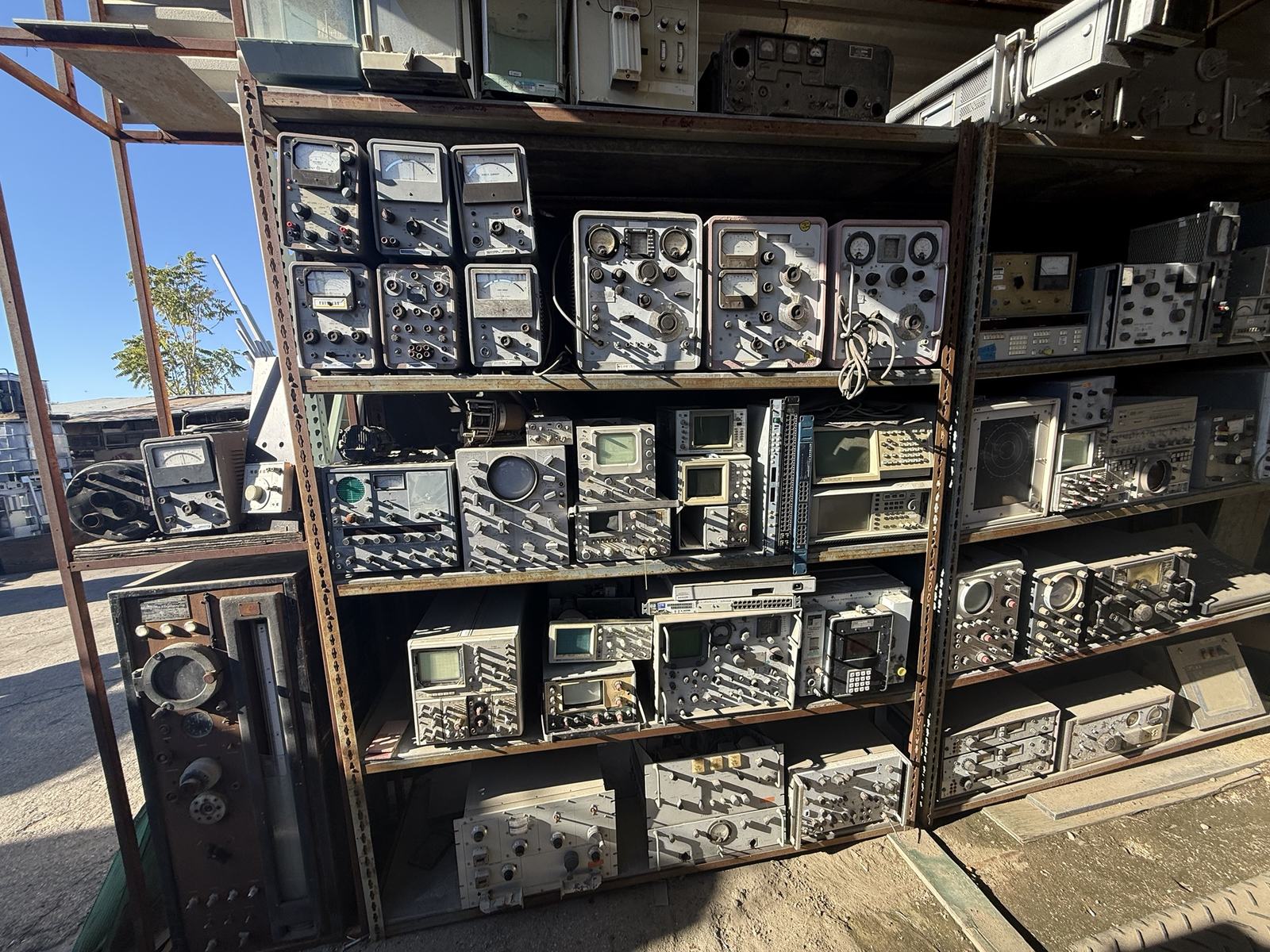
Bench test gear from the 1950s to the 1990s, mostly Hewlett-Packard and Tektronix.

Hewlett-Packard bench meters

Six in the classic HP cabinet

Recognised by shape
What it is
Six analog meters from HP's 1950s and 60s line. Two have scales marked DIRECT CURRENT and a large probe socket on the front, which matches the HP 428B clip-on DC milliammeter. The others are voltmeters and a decibel meter.
What it does
The 428B measures DC current without cutting the wire. A probe clamps around the conductor and senses its magnetic field. The voltmeters read AC or DC levels on mirrored scales.

In photo The test equipment shelves

HP 608-series signal generators

VHF signal generators, two

Recognised by shape
What it is
Two meters either side of a MEGACYCLES window, above a large tuning knob. That is the HP 608 layout.
What it does
A calibrated radio signal source for aligning and testing VHF receivers, covering roughly 10 to 480 MHz depending on the version. One meter monitors output level and the other modulation.

In photo The test equipment shelves

Signal generator between the two 608s

Looks like an HP 606A

Best guess
What it is
Two stacked meters at the left and a slide-rule dial.
What it does
The same job as the 608 at lower frequencies, from tens of kilohertz to tens of megahertz.

In photo The test equipment shelves

Analyzer with a round green screen

Not identified

Not identified
What it is
A wide panel with a round green CRT, a meter and rows of knobs.
What it does
Probably a spectrum analyzer or sweep display.

In photo The test equipment shelves

Oscilloscopes

Tektronix and HP, 1950s to 1980s

Recognised by shape
What it is
A tube-era Tektronix 500-series scope with a round screen, Tektronix 5000- and 7000-series mainframes with plug-in modules, and several portables.
What it does
They draw voltage against time on the screen. The plug-ins decide what a mainframe can measure, so a mainframe and its plug-ins belong together.

In photo The test equipment shelves

Patch bays

Rack-mount jack fields

Recognised by shape
What it is
Two tall, narrow panels of jacks standing on end.
What it does
They let an operator re-route audio or video signals with short patch cords.

In photo The test equipment shelves

Logic analyzers

HP, two

Recognised by shape
What it is
Two wide instruments with a screen at the left and a keypad at the right.
What it does
They capture dozens of digital signals at once and show them as timing diagrams or lists of states, for debugging computer hardware.

In photo The test equipment shelves

Synthesizer and pulse generators

Right-hand bay, top shelf

Recognised by shape
What it is
A keypad-entry synthesizer or function generator, an older pulse generator and some smaller supplies.
What it does
Signal sources for the test bench.

In photo The test equipment shelves

Large display with range rings

Not identified

Not identified
What it is
A big square bezel around a CRT with concentric circles on the graticule.
What it does
A polar display of the kind used for radar, sonar or antenna-pattern work.

In photo The test equipment shelves

Test set with a screen and meter

Radio or radar service set

Best guess
What it is
A panel with handles, a small CRT, a meter and many knobs.
What it does
It looks like a communications or avionics service monitor.

In photo The test equipment shelves

Computer Controlled Air Data Test Set

Pitot-static tester

Read off the nameplate
What it is
The panel label reads COMPUTER CONTROLLED AIR DATA TEST SET. It has a small screen, a keypad and a yellow knob.
What it does
It generates precise static and pitot pressures to check and calibrate aircraft altimeters, airspeed indicators and air data computers on the ground.

In photo The test equipment shelves

Tall brown floor cabinet

Not identified

Not identified
What it is
An old instrument in a brown case with a full-height vertical scale down one side, a round port, a small gauge and a nameplate at the top.
What it does
The long scale suggests a manometer-type pressure or vacuum standard. The nameplate should say.

In photo The test equipment shelves

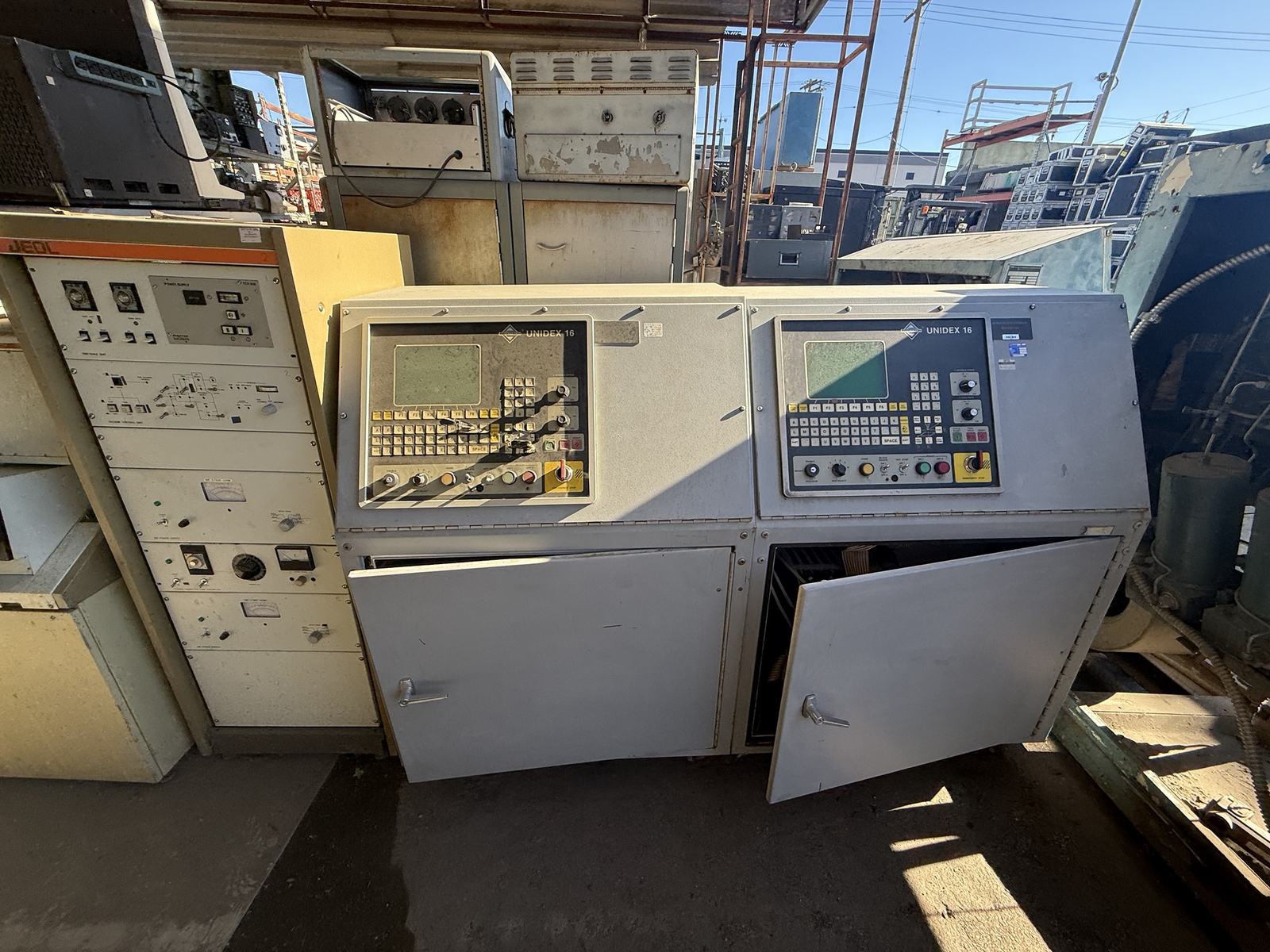
Motion control and vacuum rack

Two industrial control consoles and the pump rack from a laboratory instrument.

JEOL vacuum control rack

Ultra-high-vacuum pump controls

Read off the nameplate
What it is
JEOL across the top. The panels are labelled TMP/BAKE UNIT, a Pfeiffer Balzers TCP turbo-pump supply, VACUUM CONTROL UNIT with a mimic diagram, two SIP POWER SUPPLY panels and a titanium sublimation pump controller.
What it does
It runs the pumps of an ultra-high-vacuum instrument. The turbo pump takes the chamber down, timers run the bake-out heaters, and then sputter ion pumps and a titanium sublimation pump hold the vacuum. That pump set is typical of surface-analysis equipment such as Auger or photoelectron spectrometers.

Handle with care Ion pump supplies put out several kilovolts.

In photo JEOL rack and the Unidex 16 pair

Aerotech Unidex 16

Multi-axis motion controllers, a pair

Read off the nameplate
What it is
Two consoles marked UNIDEX 16, each with a CRT, a full keypad, override knobs, a key switch and an emergency stop.
What it does
A CNC-style controller for precision positioning. It runs a motion program and commands the servo amplifiers in the cabinet below, which drive the motors on a set of stages or a machine tool. Aerotech still lists the Unidex 16 manuals.

In photo JEOL rack and the Unidex 16 pair

Read more Aerotech manuals index (Unidex 16)

Military radio and avionics

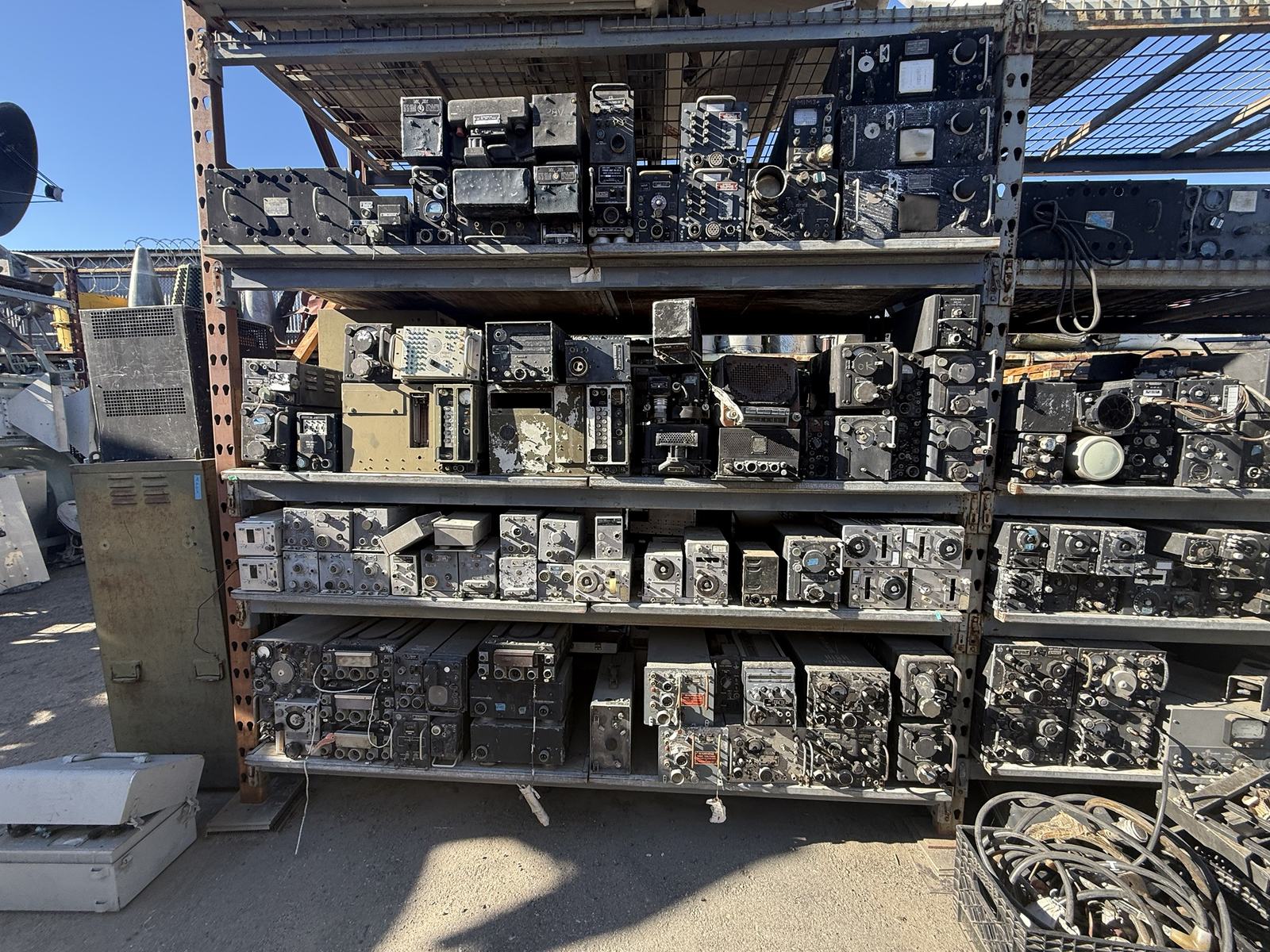
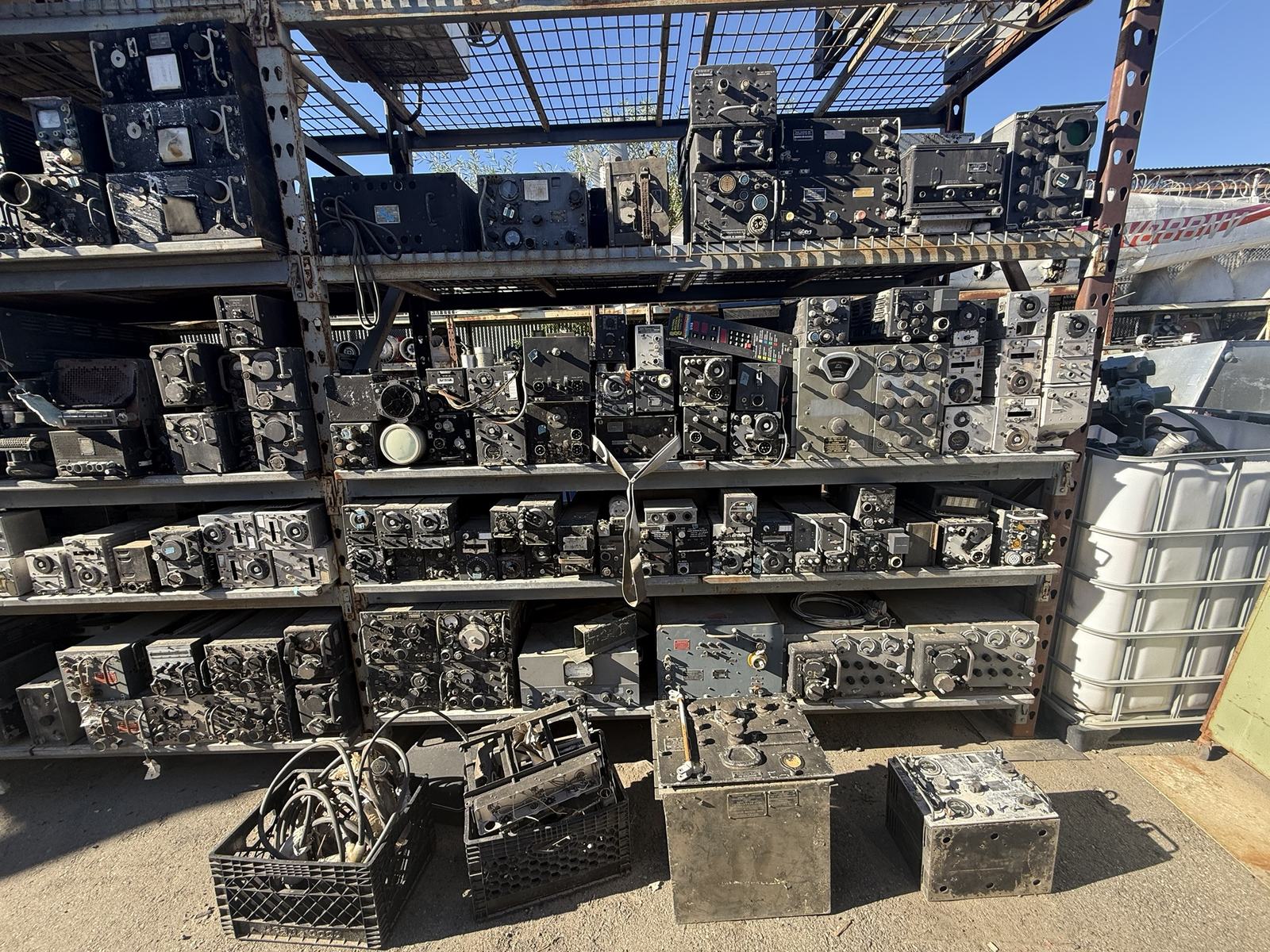
Two bays of aircraft and vehicle radio from the 1930s to the 1960s, then three close-ups of the same shelves. Most of it is the remote-mounted kind: a box in the fuselage with a control head in the cockpit.

Radio rack, left bay

Open full size
  1. 1TU tuning units
  2. 2TN-2B/APR-1
  3. 3Synchro test panel
  4. 4BC-604
  5. 5FA set
  6. 6TN-129B/APR-9
  7. 7APR tuning units
  8. 8ARC ARN-30
  9. 9BC-1033-A
  10. 10Command sets
  11. 11Unidentified
  12. 12REL radar receivers

Radio rack, right bay

Open full size
  1. 1TU tuning units
  2. 2APR tuning units
  3. 3Unidentified HF set
  4. 4Command sets
  5. 5Unidentified

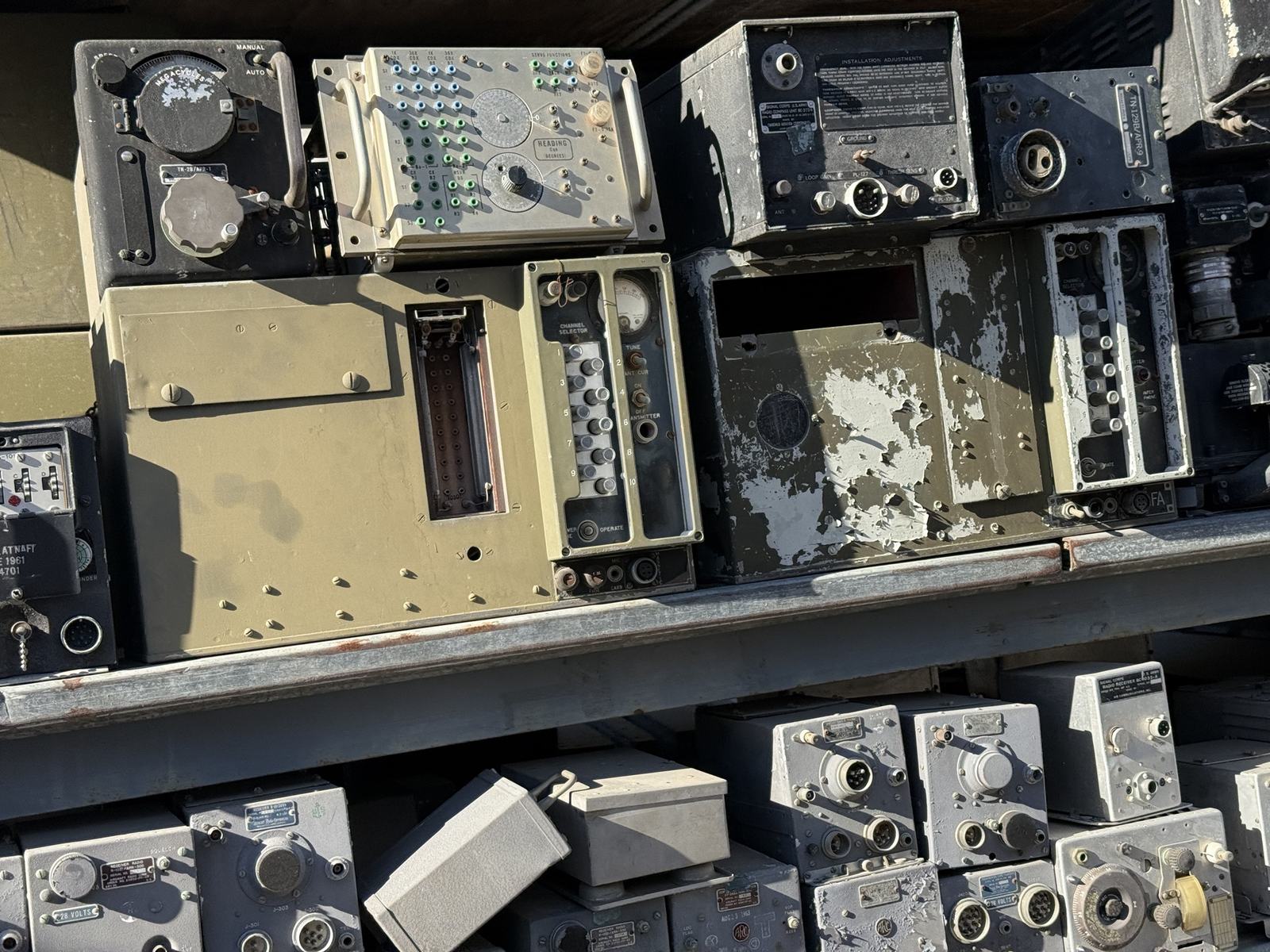
Second shelf, close up

Open full size
  1. 1TN-2B/APR-1
  2. 2Synchro test panel
  3. 3BC-373-A
  4. 4TN-129B/APR-9
  5. 5BC-604 transmitter
  6. 6FA plate set
  7. 7Code wheels
  8. 8ARC and command sets

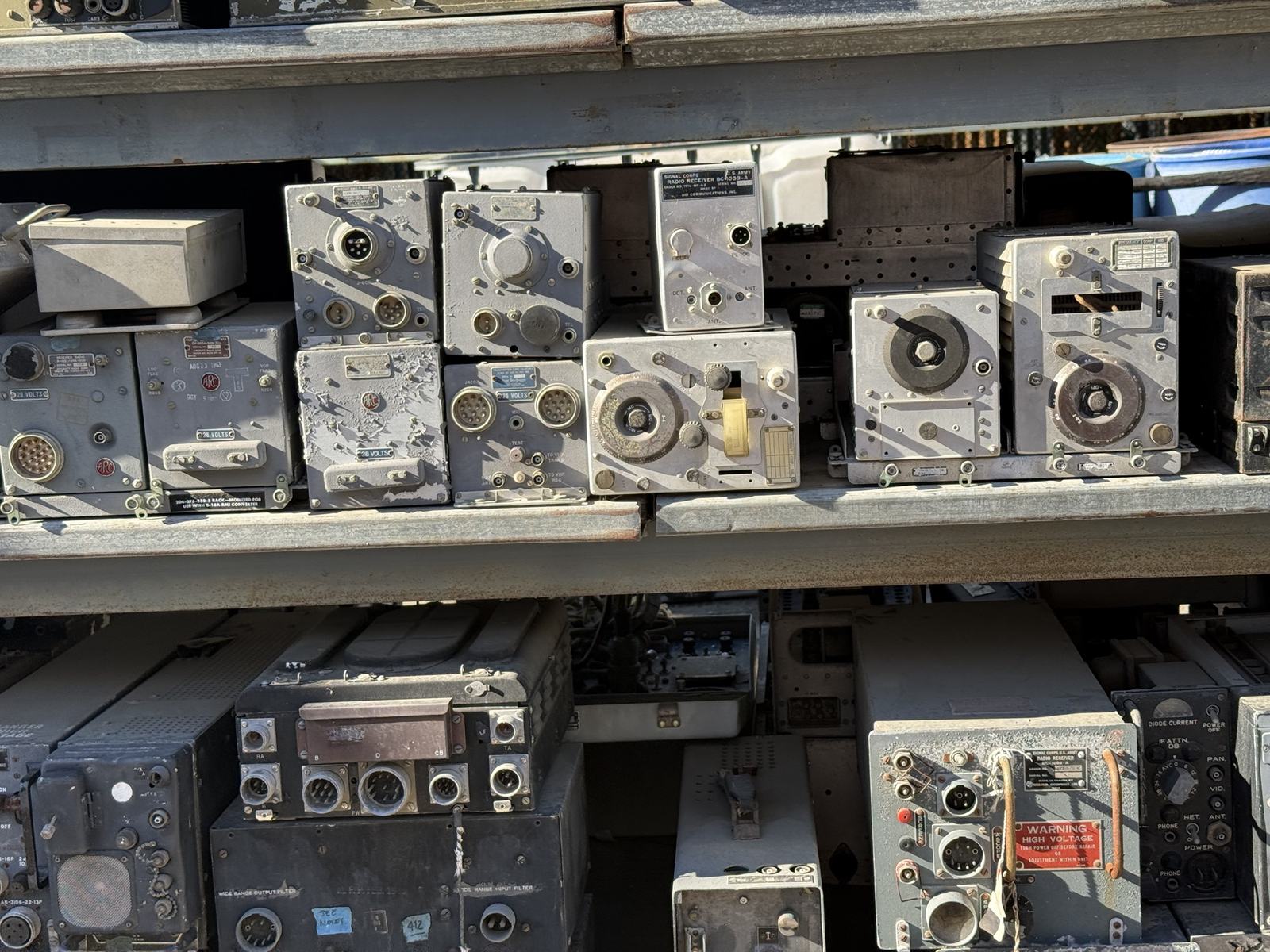
Third shelf, the ARC units

Open full size
  1. 1ARN-30D receiver
  2. 2CV-265A converter
  3. 3Rack tag 204-
  4. 4TV-10 transverter
  5. 5BC-1033-A
  6. 6Command sets
  7. 7Unidentified
  8. 8Filter box
  9. 9REL radar receiver
  10. 10Search receiver unit

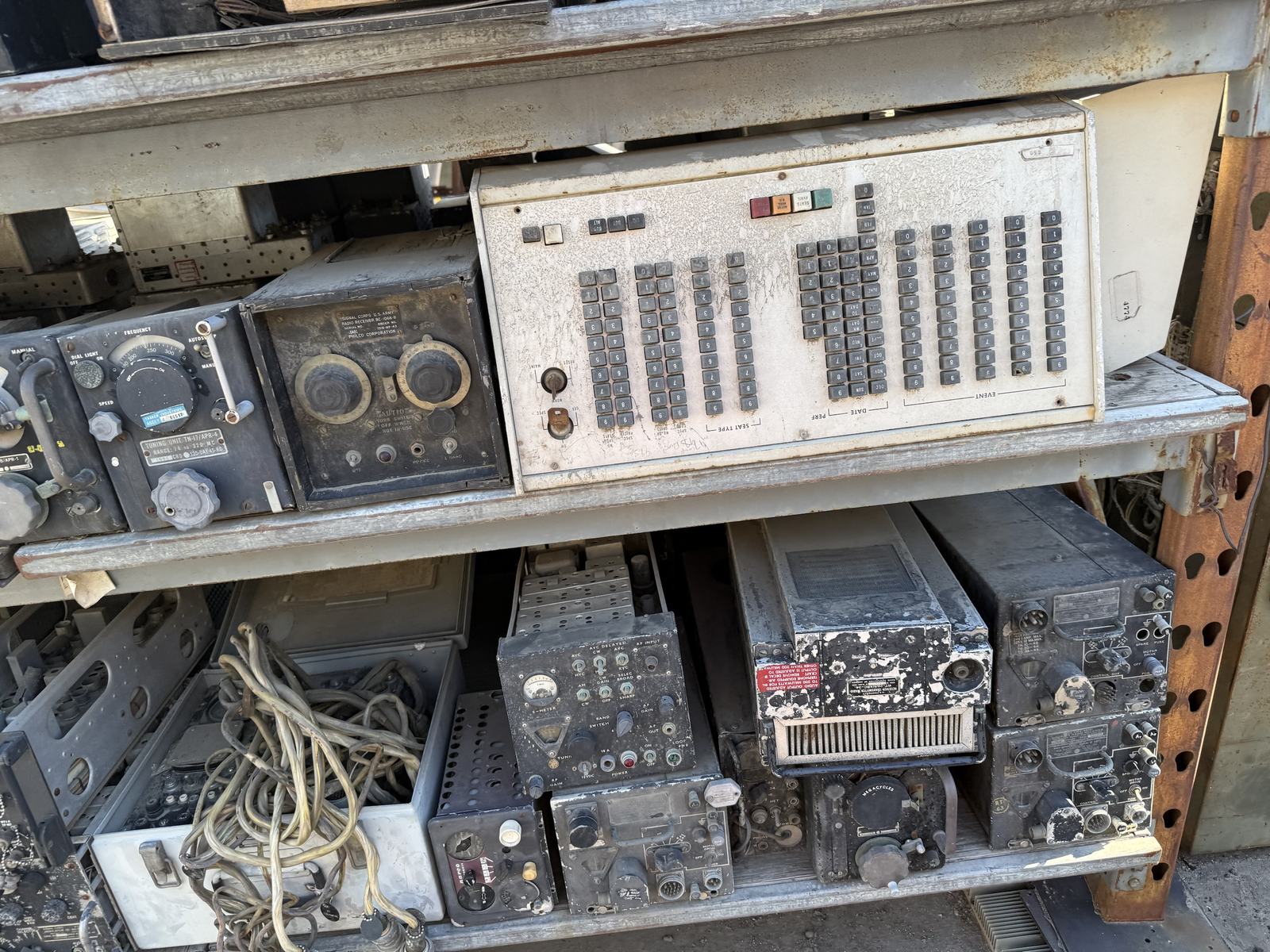
The ticketing terminal shelf

Open full size
  1. 1Seat-reservation terminal
  2. 2Seats-available lamps
  3. 3TN-17/APR-4
  4. 4BC-1066-B
  5. 5Narco radio
  6. 6Navy RT 63 unit

TU-series transmitter tuning units

For the BC-375 and BC-191, three stacked

Recognised by shape
What it is
Three black panels, each with a white calibration chart in the middle and large dials. They match the plug-in tuning units of the BC-375 aircraft transmitter and its ground twin, the BC-191.
What it does
Each unit holds the coils and capacitors for one frequency band and slides into the front of the transmitter. Changing band meant swapping units. The TU-5, for example, covers 1.5 to 3 MHz.

In photo Radio rack, left bay Radio rack, right bay

Read more Radiomuseum, Tuning Unit TU-5

TN-2B/APR-1

Radar search receiver tuning unit, WWII

Read off the nameplate
What it is
Nameplate TN-2B/APR-1. A hinged cover over a MEGACYCLES dial, a SPEED knob and a MANUAL/AUTO switch.
What it does
A plug-in front end for the AN/APR-1 search receiver, which listened for enemy radar. The TN-2 covers 76 to 300 MHz. In AUTO a motor sweeps it across the band.

In photo Radio rack, left bay Second shelf, close up

Read more N6CC on the AN/APR-1 and APR-4

Synchro heading test panel

Two-speed synchro simulator

Read off the nameplate
What it is
A pale grey panel marked HEADING (DEGREES) and SERVO FUNCTIONS. The jack columns are headed 1X CDX, 36X CDX, 1X CX and 36X CX, with rows S1 to S3 and R1 to R3.
What it does
Synchros send a shaft angle down wires as three AC voltages. This panel generates or breaks out those signals for a compass or heading system so it can be tested on the bench. 1X is the coarse synchro and 36X the fine one. CX is a control transmitter and CDX a differential transmitter.

In photo Radio rack, left bay Second shelf, close up

BC-604 tank transmitter

SCR-508 FM set, WWII

Recognised by shape
What it is
Olive drab, with a CHANNEL SELECTOR column of ten push buttons, a TUNE / ANT CUR switch, an antenna current meter and microphone jacks marked CARB and MAGNETIC.
What it does
The transmitter of the SCR-508, the standard US tank radio of the war. It has ten crystal-controlled FM channels between 20 and 27.9 MHz at about 25 W, and sat in the turret beside two BC-603 receivers.

In photo Radio rack, left bay Second shelf, close up

Read more SCR-508, Wikipedia Radiomuseum, Radio Set SCR-508

Second push-button transmitter, FA plate

Probably a BC-684 (SCR-608)

Best guess
What it is
The same layout as the BC-604 with most of its paint gone and a small plate stamped FA.
What it does
The artillery used an almost identical set, the SCR-608, whose BC-684 transmitter covers 27 to 38.9 MHz. FA would fit Field Artillery, so this may be the BC-684. The nameplate will say.

In photo Radio rack, left bay Second shelf, close up

Read more SCR-508, Wikipedia

TN-129B/APR-9

Microwave tuning unit, 1950s

Read off the nameplate
What it is
Nameplate TN-129B/APR-9.
What it does
One of the tuning units for the AN/APR-9 radar intercept receiver, which flew in aircraft such as the B-52, EB-66 and P-2.

In photo Radio rack, left bay Second shelf, close up

Read more AN/APR designations

More APR tuning units

Same family, several

Recognised by shape
What it is
Black units with a large dial under a hinged cover and a carrying handle. Two are chalked OK.
What it does
More plug-in tuning heads for the APR-1 and APR-4 search receivers, each covering a different band.

In photo Radio rack, left bay Radio rack, right bay

Read more N6CC on the AN/APR-1 and APR-4

ARC navigation receiver, AN/ARN-30D

VOR and localizer receiver, 28 V

Read off the nameplate
What it is
The plate reads RECEIVER, RADIO …/ARN-30D, Aircraft Radio Corp. The type number looks like R-1021, but the photo is soft.
What it does
Receives VHF omnirange (VOR) and runway localizer signals, the standard airways and approach aids. ARC sold the same design to civil owners as its Type 15.

In photo Radio rack, left bay Third shelf, the ARC units

BC-1033-A marker beacon receiver

Air Communications Inc., 28 V

Read off the nameplate
What it is
Signal Corps plate: RADIO RECEIVER BC-1033-A, made by Air Communications, Inc. Sockets marked RELAY, DET. and ANT.
What it does
A fixed-tuned 75 MHz receiver with three tubes. When the aircraft passes over a marker beacon on the approach path, it closes a relay and lights a lamp on the instrument panel.

In photo Radio rack, left bay Third shelf, the ARC units

Read more AN/MRN-3, Wikipedia (BC-1033) Radiomuseum, BC-1033-B

Command-set receivers and transmitters

SCR-274-N, AN/ARC-5 and ARC Type 12 family

Recognised by shape
What it is
Rows of small aluminium boxes. The receivers have a crank-tuned dial marked MC. The transmitters have ANT INDUCTANCE and ANT COUPLING controls.
What it does
Single-band aircraft radios. A plane carried one receiver and one transmitter for each band it needed, racked side by side and tuned from the cockpit through flexible shafts. After the war they became the classic surplus ham radio.

In photo Radio rack, left bay Radio rack, right bay Second shelf, close up Third shelf, the ARC units

Read more N6CC on the ARC Type 12 and TV-10

Black units with lettered sockets

Not identified

Not identified
What it is
Three black boxes with a brown data plate and sockets lettered RA, B, D, CB, LF and TA.
What it does
Junction or control units for a larger aircraft radio installation. The data plate will name the set.

In photo Radio rack, left bay Third shelf, the ARC units

Radar receivers by Research Enterprises Ltd.

Signal Corps BC-10?2-A, made in Canada

Read off the nameplate
What it is
The plate reads SIGNAL CORPS U.S. ARMY, RADIO RECEIVER BC-10?2-A, MADE IN CANADA BY RESEARCH ENTERPRISES LTD. One digit is unclear. Each has a red WARNING HIGH VOLTAGE plate and a socket labelled A SCOPE. Two are stacked here.
What it does
The A SCOPE socket fed an A-scope, the simplest radar display, so this is the receiver of a wartime radar. Research Enterprises was the Canadian government company that built radar and optics in Toronto during the war.

In photo Radio rack, left bay Third shelf, the ARC units

Large grey set with a half-moon dial

Not identified

Not identified
What it is
A wide grey panel with a half-moon dial window, three round meters and six large knobs.
What it does
A high-power HF transmitter or receiver. It could not be matched to a type from this photo.

In photo Radio rack, right bay

Black unit on the ground

Not identified

Not identified
What it is
A tall black case with two nameplates on the side and controls on top, next to a second case with two round meters.
What it does
Possibly a transmitter or its power unit. The side plates should be readable up close.

In photo Radio rack, right bay

Radio Compass Unit BC-373-A

Fairchild Aviation, about 1939

Read off the nameplate
What it is
Signal Corps plate: RADIO COMPASS UNIT BC-373-A, made by Fairchild Aviation Corporation, Jamaica, N.Y. A second plate gives installation adjustments for loop gain and threshold sensitivity.
What it does
The receiver of the SCR-246-A radio compass, a pre-war Army aircraft homing set. It tunes 195 to 420 kHz and drives a left-right needle that shows which way to turn toward a beacon or broadcast station. It also received radio range and weather broadcasts.

In photo Second shelf, close up

Read more RadioNerds, SCR-246

Control box with code wheels

Transponder control, dated 1961

Best guess
What it is
A small black box with thumbwheels lettered A to D, a 1961 date and part of the word TRANSPONDER.
What it does
Sets the reply code of an aircraft's radar transponder.

In photo Second shelf, close up

ARC converter, CV-265A/ARN-30A

Stamped AUG 23 1963

Read off the nameplate
What it is
The plate reads CONVERTER …/ARN-30A, with inspection stamps from August and October 1963. Two adjusters on the front are marked LOC FLAG and VOR FLAG.
What it does
Turns the receiver's output into needle signals: the course deviation bar, the TO/FROM indication and the warning flags on the pilot's indicator.

In photo Third shelf, the ARC units

Rack tagged 204-07?-350-3

Mounting rack for the ARC set

Read off the nameplate
What it is
The tag reads “204-07?-350-3 RACK — MODIFIED FOR USE WITH … RMI CONVERTER”.
What it does
A shock-mount tray. Part numbers that start 204- follow Bell's Model 204 numbering, the UH-1 Huey, so this ARC set may have come out of a helicopter.

In photo Third shelf, the ARC units

ARC TV-10 UHF transverter

Military CV-431/AR

Recognised by shape
What it is
A blue ARC plate headed TRANSCEIVER TYPE, a 28 VOLTS tag and jacks marked UHF ANT, TO VHF TRANS and TO VHF REC.
What it does
It let a small VHF aircraft radio work on military UHF. On receive it converts 228–258 MHz down to 118–148 MHz so the VHF receiver can tune it. It also transmits about half a watt on up to eight crystal channels. It was part of the AN/ARC-60 in Army light aircraft and helicopters such as the L-19, L-20, H-13 and UH-1.

In photo Third shelf, the ARC units

Read more N6CC on the ARC Type 12 and TV-10

Wide-range filter boxes

Power-line filters

Read off the nameplate
What it is
Black boxes lettered WIDE RANGE INPUT FILTER and WIDE RANGE OUTPUT FILTER.
What it does
They keep electrical noise from a dynamotor or inverter out of the radio wiring. The set they belong to is not marked on the front.

In photo Third shelf, the ARC units

Search receiver main unit

DIODE CURRENT meter, IF ATTN, PAN and VID outputs

Best guess
What it is
A black panel with a DIODE CURRENT meter, an IF attenuator marked in dB and jacks labelled PAN, VID, HET, ANT and PHONE.
What it does
The chassis a tuning unit plugs into. It amplifies the intermediate frequency and hands the signal to headphones, a video output for pulse analysis and a panoramic display. The diode-current meter watches the crystal mixer, which points to one of the microwave APR sets.

In photo Third shelf, the ARC units

Seat-reservation terminal

Computerized box-office console, about 1970

Read off the nameplate
What it is
A sloped console of square keys. The columns are headed SEAT TYPE, DATE, PERF and EVENT, with month keys from JAN to DEC. The lamps along the top read SEATS AVAIL and MAY BE AVAIL B.O.
What it does
An agent's terminal from an early computerized ticketing network. The clerk keyed in the event, performance, date and seat type. A central computer answered by lighting a lamp, and available seats were printed as tickets on the spot. Ticketron began selling this way in 1967, and a Los Angeles rival, Computicket, folded in 1970. It is the most unusual thing in these photos.

In photo The ticketing terminal shelf

Read more Ticketron, Wikipedia Time, “Computers: Instant Ticketing”

TN-17/APR-4

Radar intercept tuning unit, WWII

Read off the nameplate
What it is
Marked TN-17/APR-4.
What it does
The 74 to 320 MHz plug-in for the AN/APR-4 intercept receiver. It uses two type 955 acorn tubes as mixer and oscillator, and a motor drive sweeps between two limits the operator sets.

In photo The ticketing terminal shelf

Read more N6CC on the AN/APR-1 and APR-4

BC-1066-B

Philco, WWII

Read off the nameplate
What it is
Signal Corps plate BC-1066-B by Philco. Two round dials scaled 0 to 100.
What it does
A small two-band receiver from test equipment IE-46. A museum's BC-1066-A has one dial marked G band and the other I band.

In photo The ticketing terminal shelf

Read more Museum of Radio and Technology, BC-1066-A

Narco aircraft radio

1950s light-aircraft nav/com

Best guess
What it is
A small panel-mount radio with a maroon face and the Narco name. The tuning dial glass is broken.
What it does
Narco built the VHF radios that put two-way voice and omnirange navigation into private aircraft in the 1950s. The face matches its Omnigator and Superhomer line.

In photo The ticketing terminal shelf

Medical equipment

Hospital surplus against the back wall.

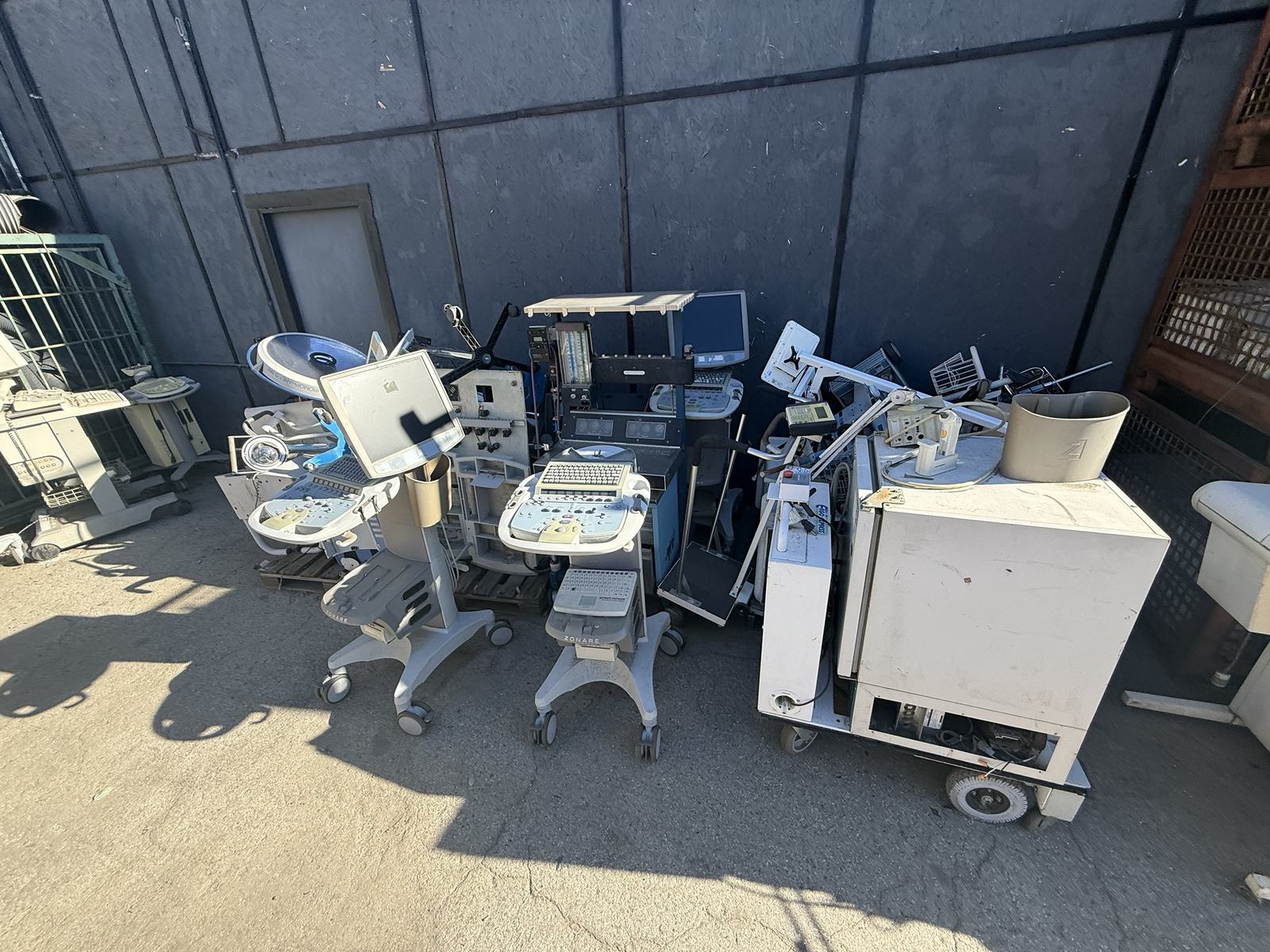
ZONARE ultrasound carts

z.one convertible ultrasound, two

Read off the nameplate
What it is
ZONARE is moulded into the base of both carts. Each has a flat monitor, a control panel with a trackball and a keyboard tray.
What it does
Diagnostic ultrasound scanners from the mid-2000s. The electronics are in a small scan engine that docks into the cart and can be lifted out and carried.

In photo The medical pile

Surgical light head

Operating-room lamp

Recognised by shape
What it is
A pale blue dish with a central handle, off its ceiling arm.
What it does
Gives shadow-free light over the operating table.

In photo The medical pile

Anesthesia machine

Blue cart with flowmeter tubes

Recognised by shape
What it is
A blue cart with a shelf on top and a bank of glass flowmeter tubes.
What it does
Mixes oxygen, air and nitrous oxide at set flows, adds anesthetic vapour and feeds the patient's breathing circuit.

In photo The medical pile

Other ultrasound consoles

Cart-based scanners

Recognised by shape
What it is
At least two more scanners behind the ZONARE carts, one with a tall flat monitor.
What it does
The same job as the ZONARE units.

In photo The medical pile

Mobile X-ray unit

Motor-driven radiography cart

Recognised by shape
What it is
The large white cabinet on drive wheels with a folded arm on top.
What it does
Takes X-ray films at the bedside. It carries its own batteries, a high-voltage generator and an X-ray tube on the arm.

Handle with care Leave the high-voltage tank and the tube sealed.

In photo The medical pile

EG&G instrument, vacuum hardware and high voltage

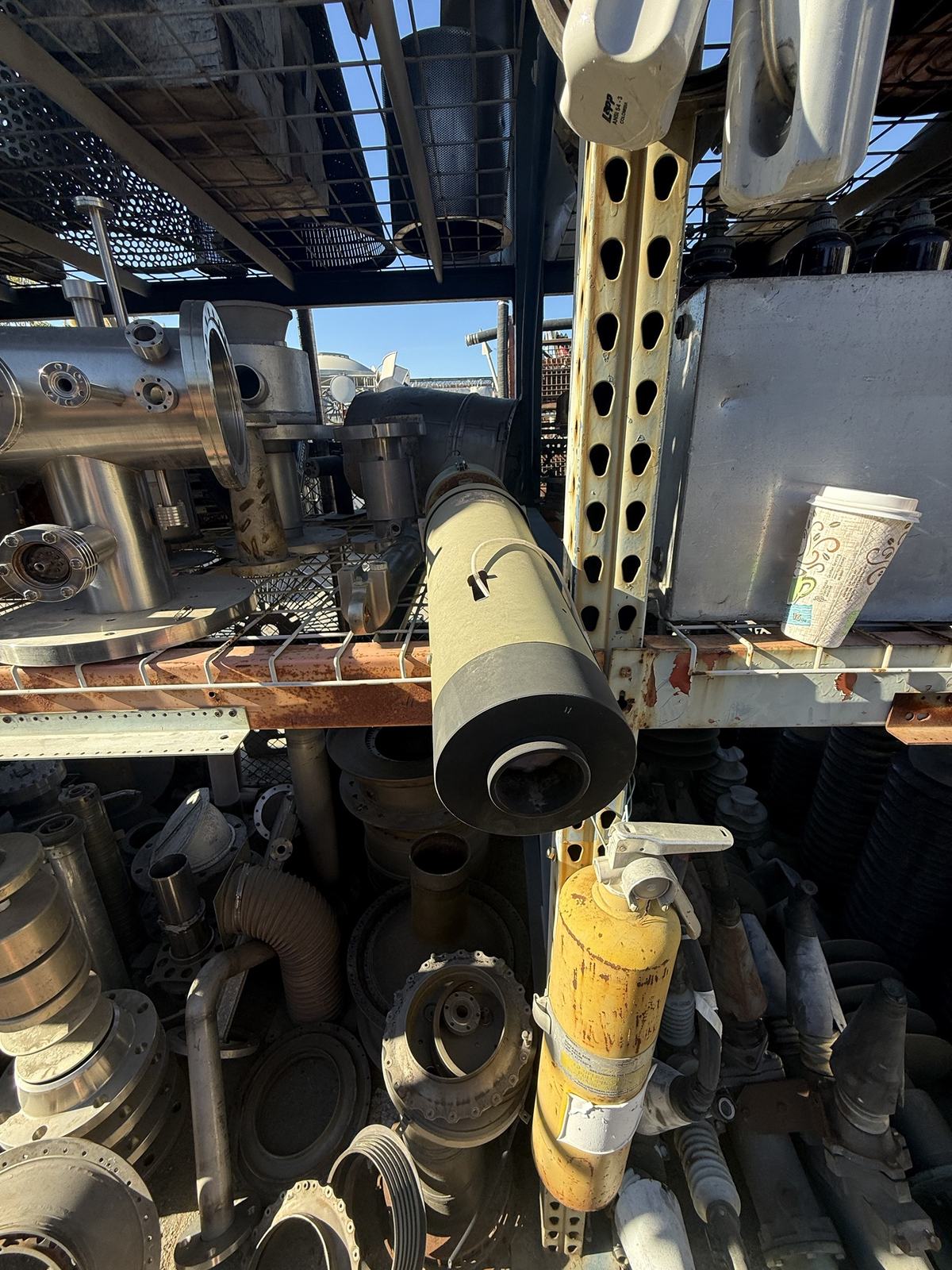
One rack holds stainless vacuum plumbing, high-voltage parts and a long olive instrument lettered EG&G that is not yet pinned down.

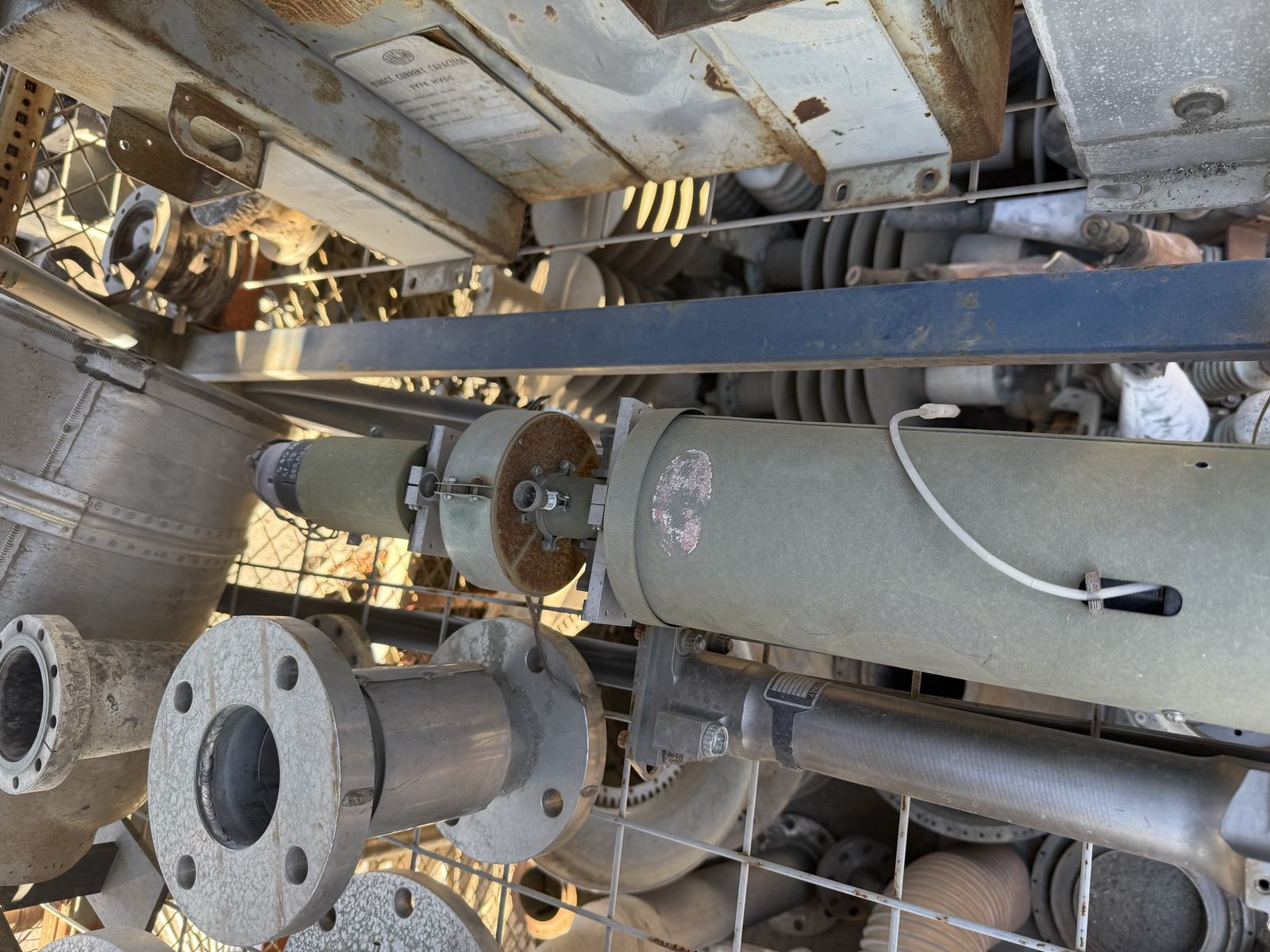
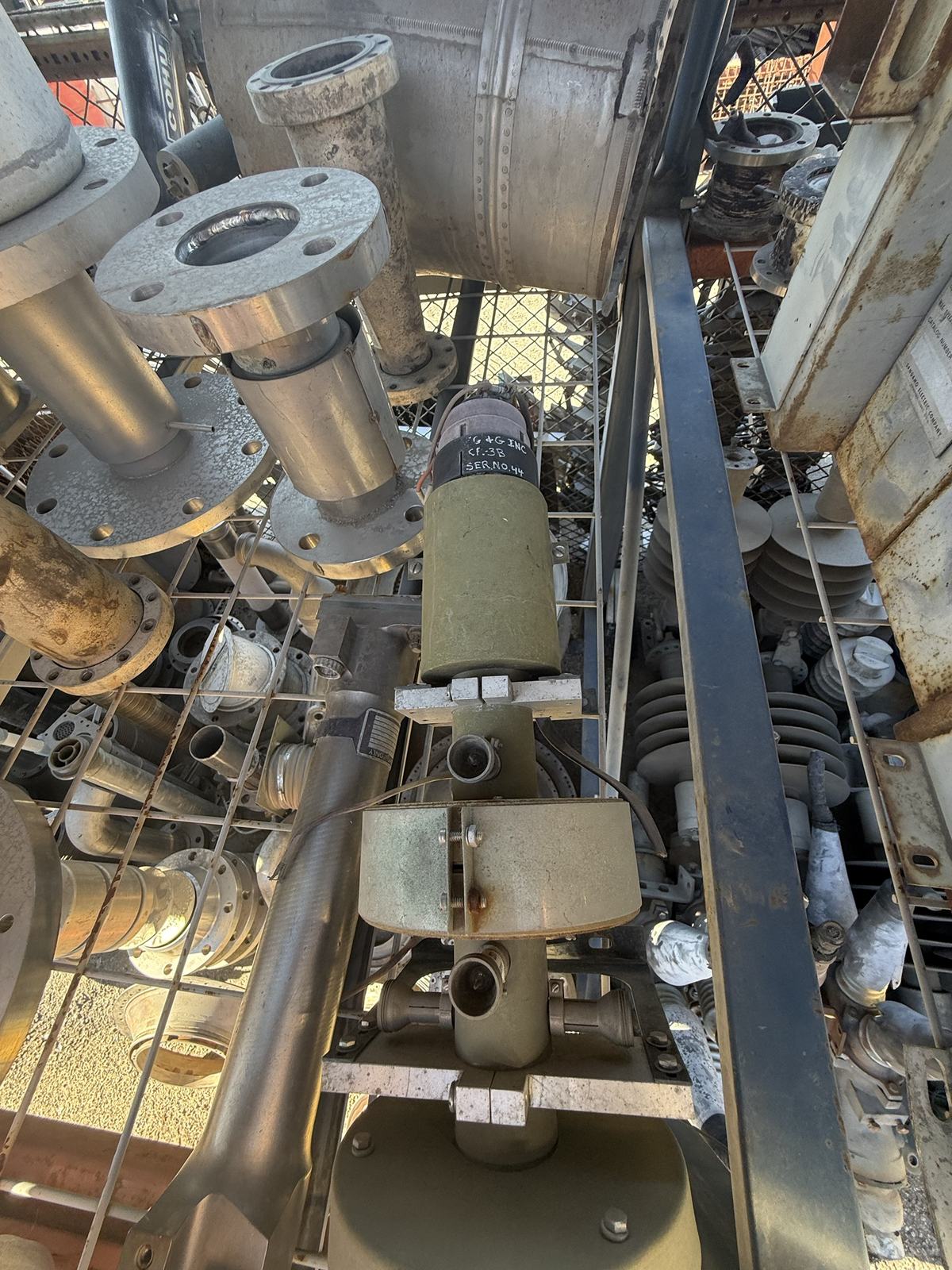
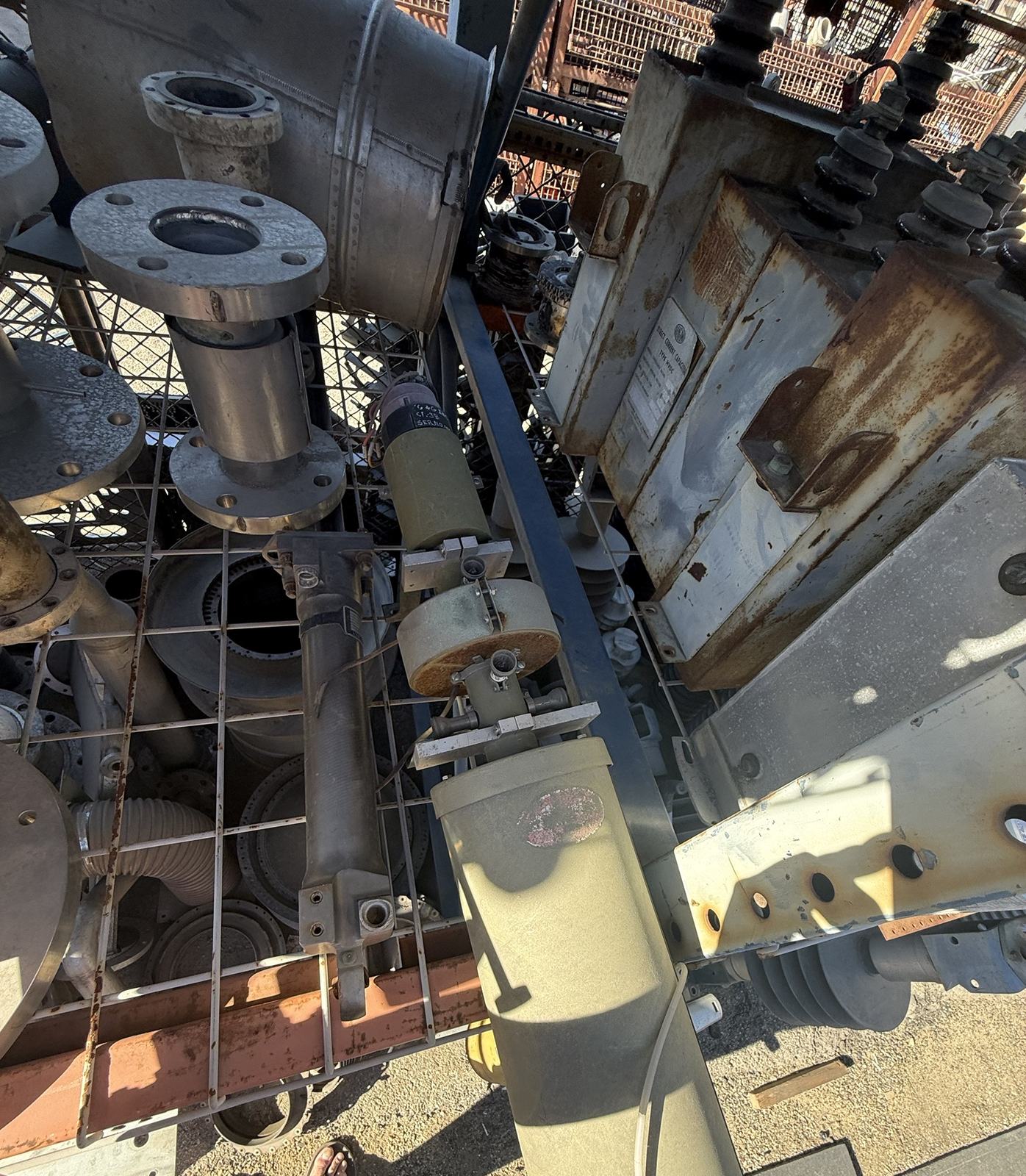
EG&G instrument, serial 44

Not yet identified

Not identified
What it is
Hand-lettered “EG&G INC / C?-3B / SER. NO. 44”. The second character could be a T or an F. The body is a long olive fibreglass tube about the width of a dinner plate, with a black end cap and a recessed round window. A white cable enters a slot near that end. At the other end, in line, are a split aluminium clamp, a cross fitting with open side ports, a drum bolted together in two halves, a second cross fitting, another clamp and a small can with a wire harness.
What it does
Two readings fit. If the lettering is CT-3B, it may be an EG&G Model CT/3 electromagnetic ocean current meter. A NOAA test report from 1975 describes the CT/3 as a self-orienting meter with excitation coils and electrodes, a flux-gate compass and a cassette recorder, and fibreglass suits that job because it is non-magnetic and does not corrode. The other reading is a test-range optical instrument. EG&G photographed and measured US nuclear tests, and a long tube with a front window, a coil and a detector can would fit a telescope with a magnetic shutter or a photomultiplier. To tell them apart, shine a light into the front window and look for a lens, and check whether the side ports are open or hold glass.

In photo The EG&G instrument from the side The lettering and the drum Looking down its length The front window

Read more NOAA instrumentation center progress report, Jan–Jun 1975 (EG&G CT/3) Rapatronic camera, Wikipedia

Sangamo capacitors

High-voltage energy-storage cans

Read off the nameplate
What it is
Tall rectangular steel cans with ceramic terminals. The plates carry the Sangamo Electric name.
What it does
They store energy at high voltage and release it in a pulse, for lasers, flash lamps and pulsed-power work.

Handle with care Large capacitors can hold or recover a charge, so keep the terminals shorted. Units made before 1979 may contain PCB oil unless the label says otherwise.

In photo The EG&G instrument from the side The lettering and the drum Looking down its length

Handle with care

  • Luminous dials. Treat glow-in-the-dark markings on WWII-era radios and instruments as radium paint. Leave those dials sealed and do not scrape or sand them.
  • Oil-filled cans. Capacitors and transformers made before 1979 may contain PCB oil unless the label says otherwise.
  • Big capacitors. They can hold or recover a charge for years. Keep the terminals shorted with a wire.
  • Camera tubes. Tube cameras are damaged by bright light even when switched off. Keep lenses capped and out of direct sun.
  • Arc lamps and X-ray tubes. Leave stage-light lamps in their housings, and leave the X-ray unit's tube and high-voltage tank sealed.